
Not every surface can withstand a hard abrasive. Plastic granules are a special blasting media used for cleaning and coating removal, causing less damage to the substrate thanks to their low hardness. In this article we answer the questions what is plastic media blasting, what is it used for, on which surfaces it is used and what to watch for a good result.
What are plastic granules?
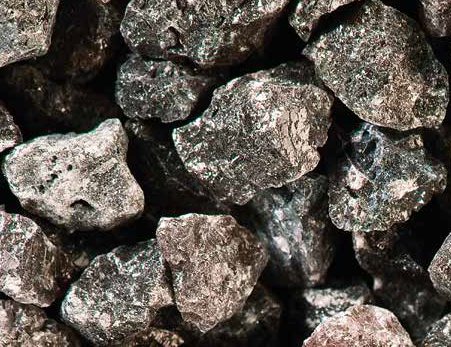
Plastic granules consist of polymer grains crushed or shaped to specific sizes. They are significantly softer than mineral abrasives. Their main aim is therefore not to create a deep profile on the surface but to remove the top layer in a controlled way.
- Hardness: Mohs approximately 3 – 4
- Density: approximately 1.5 g/cm³
- Grain shape: Angular, crushed polymer
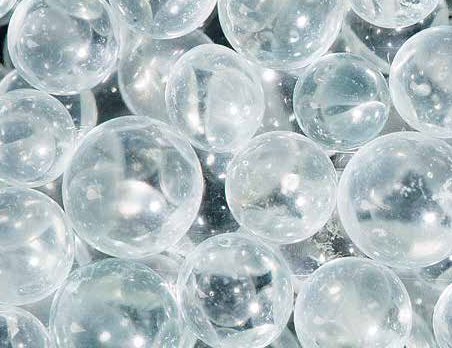
For comparison: aluminium oxide has a Mohs hardness of 9 and glass beads around 5.5 – 6. Because plastic granules are much softer than these abrasives, they can strip paint without abrading the underlying metal or composite.
Where is plastic media blasting used?
- Paint and coating removal on delicate parts
- Deburring plastic and rubber parts
- Mould cleaning
- Controlled cleaning of materials such as composites and aluminium
- Cleaning of some electronic and automotive parts
Suitability varies with the material and coating combination, so a test should be carried out on a sample part. For a general overview of blasting methods, see the Wikipedia article on abrasive blasting.
Plastic granule mesh sizes
Plastic granules are usually specified by mesh range. The ranges on our product page are:
| Mesh | Size range (mm) | Application |
|---|---|---|
| 12/16 | 1.18 – 1.70 | Thick coatings |
| 20/30 | 0.60 – 0.85 | General paint stripping |
| 30/40 | 0.42 – 0.60 | Delicate surfaces |
| 40/60 | 0.25 – 0.42 | Fine work |
Advantages
- Protects the substrate: Low risk of abrasion on metal, composite and delicate surfaces.
- Does not damage details: Less damage to corners, edges and fine details.
- Reusable: Can be used more than once with suitable recovery systems.
- Alternative to chemical strippers: Offers a dry method instead of chemical paint strippers in some jobs.
We explain the logic of recovery in our article on abrasive recovery.
Limitations
Plastic granules are generally not sufficient for hard mill scale and thick rust. If a pronounced profile is required for subsequent painting, a different surface preparation may also be needed. In addition, dust accumulating on the media can affect the system, so the recovery set-up must be well designed.
Plastic granules vs glass beads vs aluminium oxide
| Media | Effect | Typical process |
|---|---|---|
| Plastic granules | Low abrasion | Coating removal, deburring |
| Glass beads | Satin finish | Decorative finishing, light cleaning |
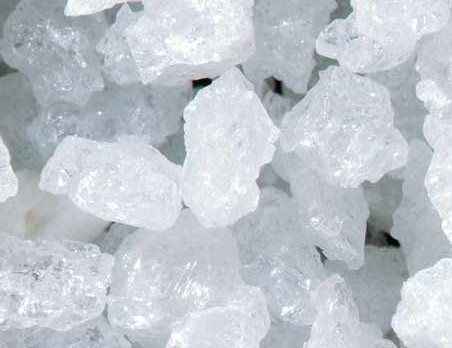
| White aluminium oxide | Cutting action | Matt finish, profile before coating |
If you need to create a profile for paint after stripping the coating, a cutting abrasive such as white aluminium oxide can be used as a second step.
Why do the right settings matter?
Even a soft media can leave marks or distort thin surfaces with the wrong pressure or prolonged application. Start with a low pressure and progress by checking the result. Keeping the nozzle moving and maintaining angle and distance prevents heating and distortion on thin sheets.
Application steps
- Choose a test area: Start with a small area on a hidden part of the component.
- Start at low pressure: If the coating does not come off, increase the pressure gradually.
- Keep distance and angle constant: Keep the nozzle moving; do not stay on one spot.
- Check the result: Look for marks, heating or distortion on the substrate.
- Remove the dust: Clean the surface with clean, dry air before the next process.
Frequently Asked Questions
Can plastic granules be used on aluminium wheels?
Plastic granules are among the options considered for stripping paint from soft metals such as aluminium. Because the result depends on the paint type and settings, a test should first be carried out on a small area.
Do plastic granules remove rust?
They are generally not sufficient for thick rust and hard mill scale. Harder abrasives such as garnet, aluminium oxide or steel grit are used for these jobs.
How many times can plastic granules be used?
They can be used more than once with suitable pressure and a recovery system. The number of cycles depends on pressure, the coating being removed and the dust separation efficiency of the system.
Request a quote for plastic granules
If you share your part type, the coating to be removed and your equipment, we can help with the right mesh range and product. Contact us via the quote form.