
Cut wire shot is an abrasive produced by cutting metal wire of a specific diameter into short pieces. Thanks to the production method, grain size can be controlled precisely; its durable structure makes it a choice especially for repetitive blasting and peening work. In this article we answer the questions what is cut wire shot, what is the difference between its cylindrical and conditioned types, and what to consider when choosing.
How is cut wire shot produced?
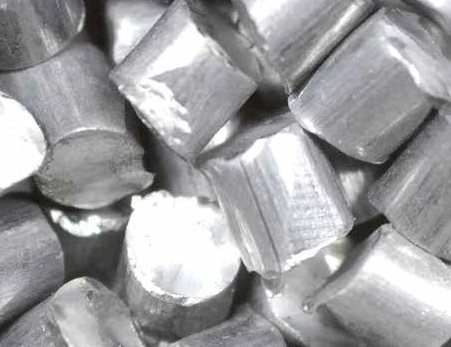
Cut wire shot is produced by cutting drawn steel wire into lengths equal or close to the wire diameter. As a result, the diameter and length of each grain are very similar. Unlike cast shot, it contains no internal voids or porosity; its structure is more homogeneous. This homogeneity allows the grain to wear more evenly during use and to last longer.
Cylindrical cut wire shot
Cylindrical cut wire shot keeps the sharp-edged shape it has when cut. It can produce more pronounced abrasion on the surface, and its edges gradually round off during use. It is used for cleaning, deburring and some foundry applications.
- Hardness: approximately 40 – 55 HRC
- Density: approximately 7.8 g/cm³
- Wire diameter options: from 0.4 – 0.6 mm (precision and small parts) to 1.5 – 2.0 mm (heavy cleaning)
Conditioned cut wire shot
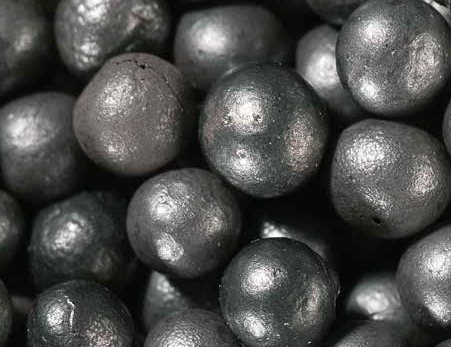
Conditioned cut wire shot is processed after cutting to round off its sharp edges. It therefore starts its service life with a more regular shape. It stands out in peening and precision cleaning applications where uniform impact is required.
- Hardness: approximately 45 – 65 HRC
- Density: approximately 7.8 g/cm³
- Wire diameter options: 0.4 – 0.6 mm (small precision parts), 0.6 – 0.8 mm (small springs and gears), 0.8 – 1.2 mm (general surface hardening), 1.2 – 1.6 mm (large parts)
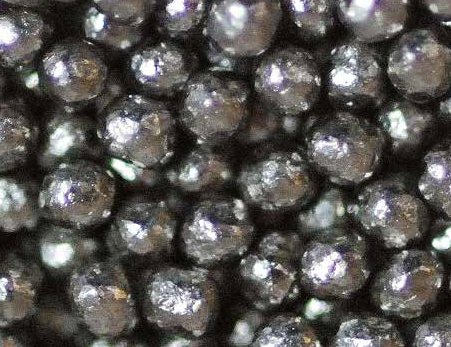
Cylindrical vs conditioned cut wire shot
| Property | Cylindrical | Conditioned |
|---|---|---|
| Shape | Sharp-edged cylinder | Rounded edges |
| Surface effect | More abrasive | More controlled |
| Hardness (approx.) | 40 – 55 HRC | 45 – 65 HRC |
| Typical jobs | Cleaning, deburring | Shot peening, uniform cleaning |
Cut wire shot or steel shot?
Steel shot is generally produced by casting. Cut wire shot, being cut from controlled wire, can be more consistent in size and composition. Shot is widely used as an economical option, while cut wire shot is considered for jobs where longer life or precision peening is required. The right choice requires considering production volume and quality expectations together.
Where is cut wire shot used?
- Shot peening: To increase the fatigue strength of springs, gears, shafts and transmission parts
- Cleaning cast and forged parts: Removing sand, scale and oxide layers
- Deburring: Removing fine burrs from aluminium and zinc die-cast parts
- Surface preparation: Achieving a uniform surface before coating
If you are interested in shot peening, our article what is shot peening explains how the process works and how it is controlled. For general information, you can also see the Wikipedia article on shot peening.
What to consider when choosing
- Diameter and length: Affect impact energy and coverage.
- Hardness: Determines surface effect and wear life.
- Material: Carbon steel, stainless steel or other alloys must be compatible with the part.
- Machine: The turbine and recovery system must be suitable for the selected media.
- Specification: For critical peening work, the media defined in the drawing and specification must be followed.
Frequently Asked Questions
Why does cut wire shot last longer than steel shot?
Because cut wire shot is made from drawn wire, it contains no internal voids or porosity. This homogeneous structure allows the grain to break down more slowly and to keep its size better during use.
Can cylindrical cut wire shot be used for peening?
Because its sharp edges can leave unwanted marks on the surface, conditioned cut wire shot is generally preferred for precision peening. Although cylindrical wire rounds off over time, its initial shape is not suitable for controlled peening.
Which wire diameter should I choose?
Part size, the desired surface effect and machine power should be considered together. Fine diameters are used for small, delicate parts and thicker diameters for large, heavy parts.
Request a quote for cut wire shot
Our sales team can help you choose the right product, diameter and hardness for your part. Send us your requirements via the quote form.