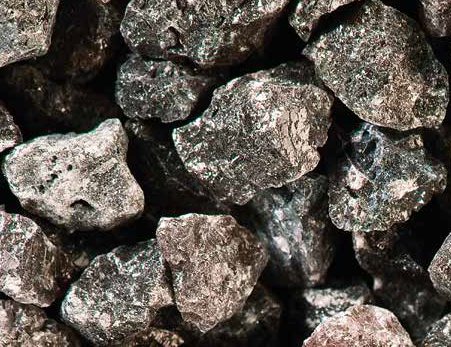

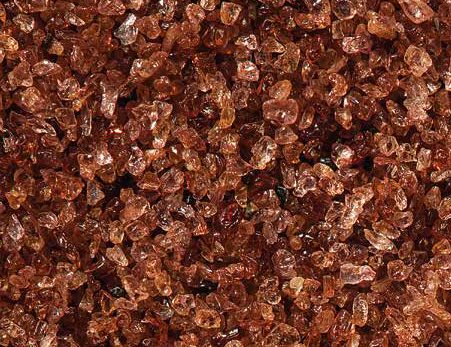
Garnet abrasive is a blasting abrasive obtained by crushing, washing and screening the naturally occurring mineral garnet. It is known for its red-brown colour, high hardness and density. It is used in many jobs, from steel surface preparation to waterjet cutting. In this article we explain what garnet abrasive is, where it is used and what to look for when choosing it.
What is garnet abrasive and how is it produced?
Garnet is the name of a family of minerals in the silicate group. The type most commonly used for blasting is almandine garnet, which contains iron and aluminium. Ore extracted from natural deposits or dunes is crushed, washed, dried and screened into specific grain ranges.
The result is a dry, dust-free abrasive with a controlled grain size. For general information on the mineral, see the Wikipedia article on garnet.
Properties of garnet abrasive
- Hardness: 7.5 – 8.0 on the Mohs scale
- Density: 3.9 – 4.2 g/cm³
- Grain shape: Angular or sub-angular depending on the production method
- Appearance: Red, dark red or brown tones
- Chemical structure: Silicate mineral containing iron and aluminium
- Solubility: Insoluble in water
Garnet does not contain silica in free crystalline form. However, trace quartz content can vary with quality, so the product's analysis certificate and safety data sheet (SDS) should be checked.
Where is garnet abrasive used?
Garnet abrasive has a wide range of applications. The main ones are:
- Steel structure and tank surface preparation: Removing rust, mill scale and old coatings before painting
- Ships and offshore structures: Open-air blasting during hull and tank maintenance
- Pipes and petrochemical equipment: Surface cleaning on site
- Concrete and floor preparation: Roughening the surface before coating
- Waterjet cutting: Cutting metal, stone and composites with abrasive waterjet
- Decorative work: Matt texture on glass and stone surfaces
Advantages of garnet blasting
Garnet is one of the preferred abrasives for open-air and on-site work. The main reasons are:
- High efficiency: Thanks to its density, each grain strikes the surface with high energy and cuts rust and paint quickly.
- Low dust: Better visibility and a cleaner working environment. Dust control and respiratory protection are still required.
- Reuse: With a suitable recovery system it can be used more than once.
- Uniform profile: With the right grain size it creates an even surface profile suitable for paint.
On the cost side, look at cost per square metre rather than price per tonne. We explain this in detail in our article on garnet abrasive prices.
Garnet abrasive mesh sizes
Garnet abrasive is usually specified by mesh range. The ranges on our garnet abrasive product page are:
| Mesh size | Size range (mm) | Application |
|---|---|---|
| 20/40 | 0.42 – 0.85 | Ship and heavy industry surface cleaning |
| 30/60 | 0.25 – 0.60 | General blasting and floor preparation |
| 80 | 0.18 – 0.30 | Fine surface treatment |
| 120 | 0.10 – 0.18 | Waterjet cutting |
Coarse grains give a deeper profile and faster cleaning; fine grains leave a smoother surface. We explain the selection logic in our grit size selection guide.
Garnet or another abrasive?
| Abrasive | Hardness (Mohs) | Point to note |
|---|---|---|
| Garnet | 7.5 – 8 | Can be reused depending on the recovery system |
| Brown aluminium oxide | 9 | Harder structure, more aggressive cutting |
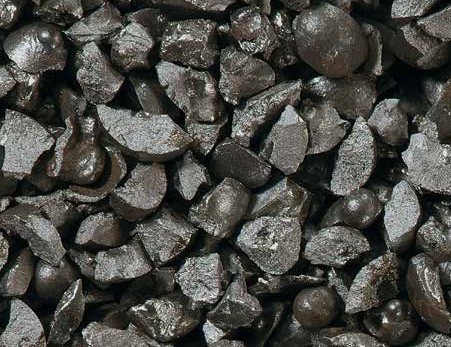
| Steel grit | Depends on hardness class | Long life in recovery cabinets and wheel blast machines |
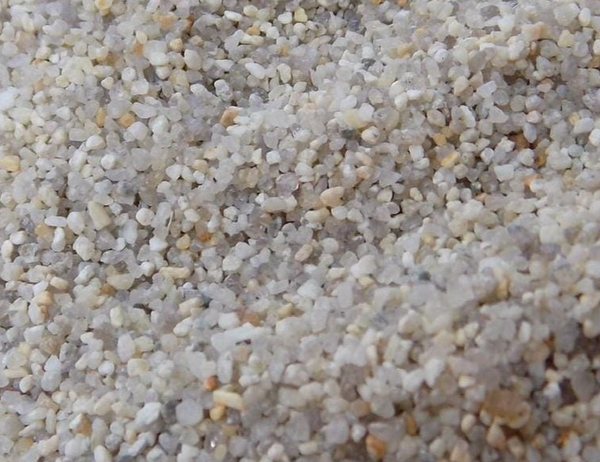
| Quartz sand | 7 | Contains free silica, high dust risk |
In enclosed cabinets and wheel blast systems, metallic abrasives can be more economical. For open-air, one-off or on-site work, garnet is often a well-balanced choice.
What to look for when choosing garnet abrasive
- Grain size distribution: The product should be within the stated range and uniform
- Moisture content: Damp garnet disrupts flow and causes hose blockages
- Dust and foreign matter: Washed, dust-free material works more cleanly
- Analysis certificate and SDS: Chemical content and safety information
- Packaging and continuity of supply: Consistent quality throughout the project
Frequently Asked Questions
Can garnet abrasive be reused?
Yes. With suitable recovery and screening equipment, garnet can be used more than once. The number of cycles depends on pressure, surface and grain breakdown.
Is garnet abrasive harmful to health?
Because garnet does not contain free crystalline silica, it carries a much lower risk than quartz sand. However, every abrasive produces dust during blasting; respiratory protection and dust control are always required. Consult an occupational safety specialist for an assessment specific to your workplace.
Which garnet is used for waterjet cutting?
Fine-grained garnet is used for waterjet cutting. The right range depends on your machine's nozzle diameter and cutting precision; please also follow the machine manufacturer's recommendation.
Can garnet abrasive be used on stainless steel?
Garnet does not contain metallic iron, so it does not leave free iron particles on the surface; clean garnet that has not previously been used on carbon steel can be considered for stainless work. For critical jobs, check the abrasives permitted in the specification. For details, see our article on stainless steel blasting.
Request a quote for garnet abrasive
Garnet abrasive is shipped to all regions of Türkiye; for deliveries outside Türkiye, please contact us. To find out the right mesh range for your job and the current price, fill in the quote form and review the technical properties on the garnet abrasive page.