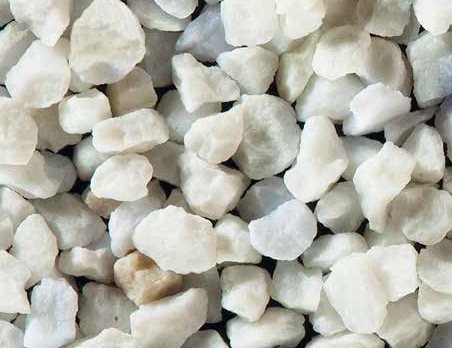


F80 is one of the most common codes in aluminium oxide orders. Yet people often ask: "How fine is F80?", "Is it the same as P80?" and "Is it right for my job?" In this post we explain what the aluminium oxide F80 code means, how to read FEPA grit numbers and which jobs F80 may suit.
What does F80 mean?
F80 is a FEPA code that indicates the size of the abrasive grain. The leading "F" shows that the code belongs to FEPA’s macro grit system, used for bonded abrasives (such as grinding wheels) and blasting abrasives. "80" indicates the grit class. FEPA is the federation of European abrasive producers and publishes grit size standards; for details, see FEPA’s official website.
A FEPA code does not define a single size but a grain distribution within set limits. In other words, the grains in an F80 bag are not all the same size; they are spread over the range the standard describes.
How to read FEPA grit numbers
- The larger the number, the finer the grain: F24 is coarse, F220 is fine.
- Macro and micro grits: macro grits from F4 to F220 are separated by sieving; F230 and finer belong to the micro grit group.
- Examples from our product pages: ranges of 600 – 850 µm for F24, 212 – 300 µm for F60, 90 – 125 µm for F120 and 45 – 75 µm for F220.
We explain the general logic of FEPA and mesh in detail in our grain size selection guide.
Where does F80 sit?
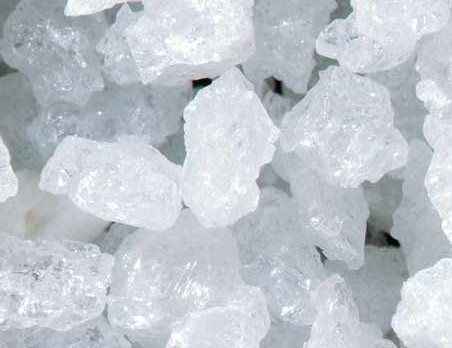
In the numbering, F80 sits between F60 and F120. According to the tables on our product pages, F60 covers 212 – 300 µm and F120 covers 90 – 125 µm; F80 lies between these two classes as a medium-fine grain. The exact distribution of F80 is defined in the FEPA standard and appears on the product’s technical data sheet. For jobs that need an exact value, you can request the data sheet from us.
Is F80 the same as P80?
No. FEPA uses two separate systems:
- F series: macro and micro grit classes used for bonded abrasives and loose-abrasive applications such as blasting.
- P series: used for coated abrasives such as abrasive paper and cloth.
The two systems define measurement and distribution differently. So even though F80 and P80 describe similar grain sizes, one does not replace the other. When buying blasting abrasive, go by the F code; do not order based on a sandpaper number.
The mesh equivalent of F80
Some suppliers and machine makers express grain size in mesh. There is an approximate relationship between FEPA codes and mesh values, but no exact equivalence, because the two systems define the distribution differently. When converting a mesh value to a FEPA code, comparing the micron ranges is the safest approach. We also explain mesh with examples in garnet mesh sizes.
Which jobs suit F80?
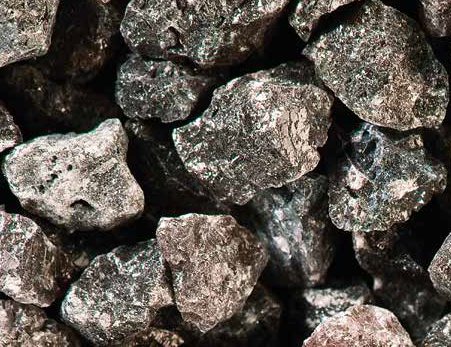
As a medium-fine grain, F80 can be considered for jobs that need both cleaning and appearance:
- Pre-coating work that needs a fine profile: applications where a finer roughness than for thick coatings is enough.
- Stainless and non-ferrous metals: even surface preparation without iron contamination using white aluminium oxide.
- Matting: an even matt look on metal, glass and ceramic surfaces.
- An intermediate step: smoothing the surface after cleaning with a coarse grain.
For heavy work such as thick rust and mill scale, a coarser number (e.g. F24 or F60) may suit better; for very delicate work, a finer one (e.g. F120 or F220). The right number depends on the surface profile the coating maker specifies and on your equipment; we explain how profile is measured in how to measure surface profile.
What to check when ordering
- Grade: white, brown or mixed alumina? White is preferred where iron contamination must be avoided.
- FEPA code: make sure the order says "F80", not just "80".
- Technical data sheet and safety data sheet: grain distribution, chemical composition and safety information are in these documents.
- Equipment fit: nozzle bore and cabinet type should suit the chosen grain size.
Frequently asked questions
How many microns is aluminium oxide F80?
The grain distribution of F80 is defined in the FEPA standard. In the sequence it sits between F60 (212 – 300 µm) and F120 (90 – 125 µm). For the exact range, you can request the product’s technical data sheet from us.
Is F80 the same as P80?
No. The F series is used for blasting and bonded abrasives, the P series for coated abrasives such as sandpaper. Because their measurement definitions differ, one does not replace the other.
Should I choose F80 or F120?
F80 cleans faster and leaves a more distinct profile; F120 gives a finer, smoother surface. If a pre-coating profile is needed, F80 may suit better; if appearance and delicate work come first, F120. Testing on a small sample is the best approach.
Let us choose the right FEPA number together
Tell us the material you blast, the surface you need and the equipment you use, and we will choose the right aluminium oxide grade and FEPA number together. Browse all products on the products page or fill in the quote form for pricing.