
Dry ice blasting is a cleaning method in which particles of solid carbon dioxide (dry ice) are sprayed onto a surface with compressed air. Because the particles turn into gas after impact, no abrasive waste is left behind, which makes the method especially popular for cleaning moulds and production equipment. But dry ice does not replace every surface preparation job. In this post we look at how dry ice blasting works, where it is useful and which jobs need classic abrasive blasting.
How does dry ice blasting work?
Dry ice is solid carbon dioxide that turns directly into gas (sublimates) at atmospheric pressure without melting, and it is very cold. It is fed to the gun as small pellets or fine particles. The cleaning effect comes from three mechanisms combined:
- Impact: the particles strike the contaminant and loosen it.
- Thermal shock: the very cold particles chill the contaminant layer suddenly, make it brittle and weaken its bond to the substrate.
- Sublimation: as the particle turns into gas its volume grows rapidly and lifts the loosened layer off the surface.
For a general definition of the method, see the Wikipedia article on dry-ice blasting.
Strengths of dry ice blasting
- No secondary waste: only the removed dirt or coating remains; no abrasive collection or separation is needed.
- Cuts no profile: the dimensions and texture of mould surfaces are preserved.
- Cleaning in place: moulds and machines can often be cleaned without dismantling, even while hot, which shortens downtime.
- Dry method: no water is used, so there is no rinse water and no drying step.
Where is dry ice blasting used?
- Removing release agents and residue from plastic injection and rubber moulds
- Removing grease and residue from food and packaging production equipment
- Cleaning ink and grease build-up from printing machines
- Cleaning deposits from welding lines and fixtures
- Soot and smoke cleaning after fires
- Removing dust and grease from some electrical equipment, following the manufacturer’s instructions
What these applications have in common is that the contaminant sits on top of the surface and the substrate must remain unchanged. We compare abrasive options for mould cleaning in mould cleaning abrasive.
Limitations: what dry ice cannot do
- It falls short on rust and mill scale. Where a certain cleanliness grade is required on steel, an abrasive is needed.
- It creates no anchor profile for paint. If a new coating is to be applied, the surface must be roughened.
- It is slow on hard, well-bonded coatings. Removing thick paint layers can take a long time.
- The material cannot be stored. Dry ice sublimates over time, so a regular supply is needed.
- Air consumption and noise are high. It requires a powerful compressor and hearing protection.
Cost and workflow
Looking only at material price is misleading when assessing cost. With dry ice you must account for equipment purchase or rental, a continuous dry ice supply and a large amount of compressed air; in return, abrasive collection, clean-up and waste disposal disappear and production stoppages can be shorter. With abrasive blasting, a recyclable abrasive is used several times in the cabinet, but a collection and separation system is needed. Dry ice stands out for moulds cleaned frequently in place; abrasives stand out for parts that fit in a cabinet and for preparation before painting. We cover recycling in abrasive recycling.
Safety
Carbon dioxide is heavier than air and can accumulate in enclosed, poorly ventilated spaces, so dry ice blasting should be done in a well-ventilated area. Because of the very low temperature, dry ice must not be touched with bare hands; suitable gloves and eye protection should be used. Hearing protection is needed against the high noise level. Consult an occupational safety specialist when planning work in enclosed spaces. We cover safety in abrasive blasting in safety in abrasive blasting.
When dry ice, when abrasive?
- Waste-free cleaning of moulds and equipment in place: dry ice is a strong option.
- Cleaning delicate parts in a cabinet with a satin finish: glass beads or plastic media are recovered and work at low cost.
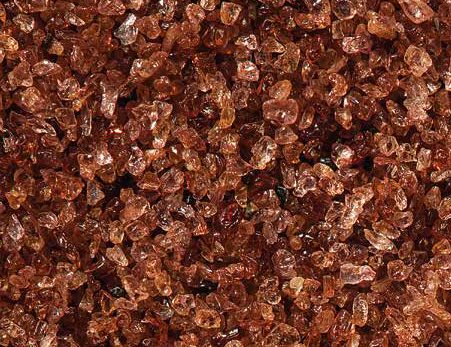
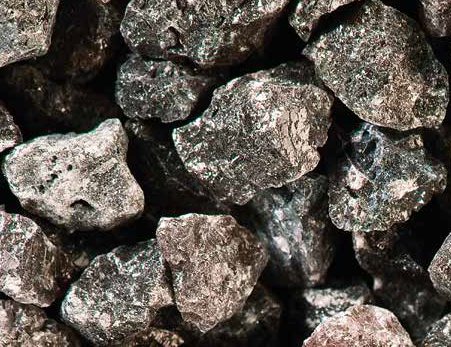
- Rust, mill scale and old paint, then new paint: garnet or brown fused alumina both clean and cut a profile. For cleanliness grades, see Sa 2, Sa 2½ and Sa 3.

Frequently asked questions
Does dry ice blasting remove rust?
It can remove loose rust and dirt, but it does not effectively remove adherent rust and mill scale. Where a cleanliness grade is required before painting, angular abrasives such as garnet or aluminium oxide are needed.
Does dry ice blasting damage the surface?
Dry ice cuts no profile and leaves no abrasive residue, which is why it is preferred on delicate surfaces such as moulds. Even so, pressure should be set carefully on very thin or fragile parts.
Can dry ice blasting be done indoors?
Since carbon dioxide can accumulate in enclosed spaces, good ventilation is essential. Before working in enclosed or confined spaces, assess the area with an occupational safety specialist.
Let us find the right method for your job
Tell us about the surface you want to clean, the type of contaminant and the next step (paint, coating, straight back to production); if abrasive blasting is suitable, we will choose the right abrasive and grain size together. Browse all products on the products page or fill in the quote form for pricing.