
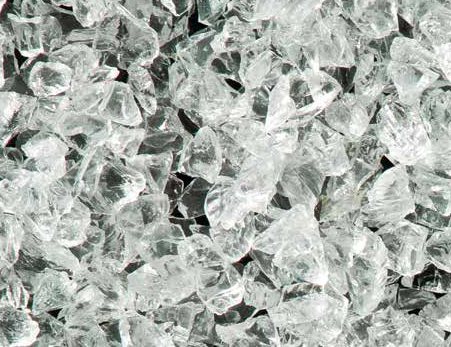
Glass abrasive is an angular abrasive made by crushing and screening recycled glass. Because it is effective at removing paint, rust and dirt, contains no iron and comes in different grain sizes, it has a wide range of uses from industrial cleaning to decorative work. In this post we answer which surfaces glass abrasive blasting is used on, how to choose the grain size and what to watch out for.
Properties of glass abrasive
Typical values from our glass abrasive product page:
- Material: recycled glass
- Hardness: Mohs 5.5 – 6
- Density: ~2.5 g/cm³
- Grain shape: angular or rounded
- Colour: usually light green, white or clear
For general information on the structure of glass, see the Wikipedia article on glass.
Which surfaces is it used on?
- Steel surfaces: removing paint, rust and dirt. Its angular grains also create a profile.
- Concrete and stone: cleaning dirt, old paint and stains; aggressive cleaning with coarse grains.
- Wood: gentle profiling and removal of old paint with fine grains at low pressure.
- Glass: decorative frosting and a matt finish for privacy.
- Graffiti and stains: removing graffiti and stains from facades and surfaces.
Because it contains no iron, it does not create a risk of iron contamination on non-ferrous surfaces such as aluminium. Still, always run a trial on a small area first.
Grain size selection
Grain ranges and applications from our product page:
| Grain size | Application |
|---|---|
| 0.2 – 0.5 mm | Matting glass and delicate surfaces |
| 0.5 – 1.0 mm | General surface cleaning |
| 1.0 – 2.0 mm | Aggressive cleaning of concrete and stone |
Coarse grains clean faster and leave a deeper profile; fine grains give a smoother surface. The general logic is explained in our post on grain size selection.
Glass abrasive or glass beads?
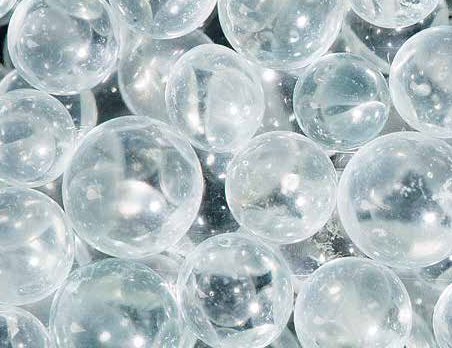
Both are made of glass but work differently: glass abrasive is angular and cuts the surface, while glass beads are spherical and leave a satin appearance. Glass abrasive is preferred for removing paint and rust, glass beads for a decorative satin finish. For a detailed comparison, see glass beads vs glass abrasive.
Settings and application tips
- Set pressure to the surface: on delicate surfaces such as wood and glass, start at low pressure and increase gradually.
- Keep distance and angle constant: irregular movement leads to a blotchy, streaky appearance.
- Keep the abrasive dry: damp glass abrasive clumps and disrupts flow.
- Track consumption: glass abrasive is mostly single-use or of limited reuse; assess cost by consumption per square metre.
Limitations
Glass abrasive is not as fast as harder abrasives on very thick or hard coatings and mill scale. For such jobs, garnet or brown aluminium oxide can be considered. Because it is brittle, it is also not suitable for wheel blast machines.
Frequently asked questions
Does glass abrasive contain crystalline silica?
Glass is amorphous and does not contain free crystalline silica the way quartz sand does. Still, every abrasive creates dust: review the product’s safety data sheet and use suitable respiratory protection. Details are in our post on safety in abrasive blasting.
Can glass abrasive be used to frost glass?
Yes. Fine glass abrasive (0.2 – 0.5 mm) is used for decorative matting and privacy frosting on glass. Masks are used for patterns, and the result is first tested on a sample pane.
Can glass abrasive be reused?
To a limited extent. Glass abrasive breaks down into finer grains during use, so it is mostly treated as a single-use abrasive or one with few reuse cycles.
Get a quote for glass abrasive
Tell us the surface you will blast and the result you need, and we will choose the right grain size together. See our glass abrasive product page or fill in the quote form for pricing.