
Because their names are similar, glass beads and glass abrasive are often confused, yet they give entirely different results on the surface. Both are made of glass; the difference comes from the grain shape. The right choice depends on whether you want to clean the surface or work its appearance.
What are glass beads?
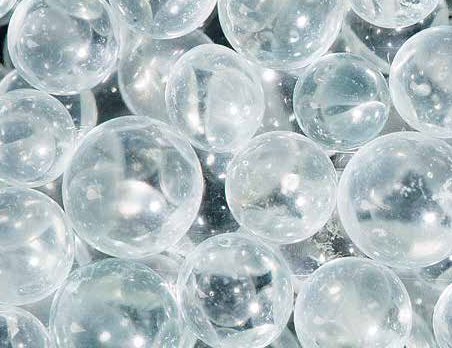
Glass beads are a glass abrasive with spherical grains. They work the surface by impact rather than by cutting, so they give a clean, satin appearance without significantly changing part dimensions. Their main uses are stainless steel and aluminium parts, weld seam cleaning and surface hardening of small parts.
What is glass abrasive?
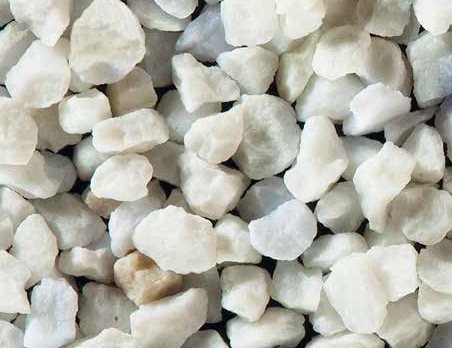
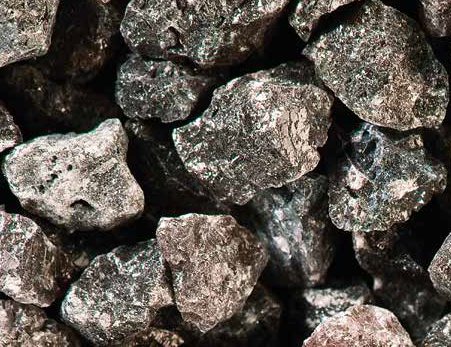
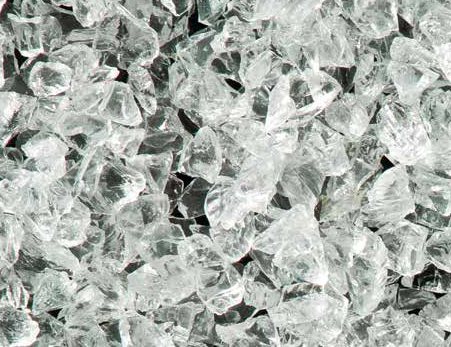
Glass abrasive is an angular abrasive obtained from recycled glass. Its angular grains work by cutting the surface. It is used for rust, paint and dirt removal, on concrete and stone surfaces, and for decorative frosting of glass surfaces.
Side-by-side comparison
| Property | Glass beads | Glass abrasive |
|---|---|---|
| Grain shape | Spherical | Angular |
| Mode of action | Impact | Cutting |
| Surface result | Satin, even | Matt, rough |
| Typical hardness | Mohs 5.5 – 6 | Mohs 5.5 – 6 |
| Paint stripping | Limited | Suitable |
| Preserving part dimensions | Good | More limited |
When are glass beads the right choice?
- Stainless and aluminium parts where appearance matters
- Precision parts with tight dimensional tolerances
- Removal of colour and residue after welding
- Surface hardening of small parts
When is glass abrasive the right choice?
- Stripping paint, rust and dirt from surfaces
- Cleaning concrete and stone surfaces
- Removing graffiti and surface stains
- Decorative frosting of glass surfaces
A common mistake
The most common mistake is trying to strip thick paint or rust with glass beads. Round grains are slow at this and do not create the profile a coating needs to adhere. The reverse also applies: on a part expected to have a satin look, angular glass abrasive leaves a matt, rough surface.
If the surface to be coated needs a profile, it is worth consulting a broader selection guide.
A note on safety
Both materials generate dust during blasting. The dust must not be inhaled, and suitable dust control and respiratory protection should be used. Review the product's safety data sheet before use.
Grain sizes
Both materials are supplied in different grain ranges. The ranges on our product pages are:
| Material | Range | Use |
|---|---|---|
| Glass beads | 0.04 – 0.11 mm | Very fine finish and fine satin |
| Glass beads | 0.15 – 0.25 mm | General satin finish |
| Glass beads | 0.25 – 0.84 mm | General and stronger cleaning |
| Glass abrasive | 0.2 – 0.5 mm | Matting glass and delicate surfaces |
| Glass abrasive | 0.5 – 1.0 mm | General surface cleaning |
| Glass abrasive | 1.0 – 2.0 mm | Aggressive cleaning of concrete and stone |
Reuse and cost
Glass beads can be used more than once with suitable pressure and a recycling system; broken beads must be removed regularly. Glass abrasive is mostly a single-use or limited-reuse material. When comparing costs, look at consumption per square metre. For glass bead settings, see surface finishing with glass beads, and for recycling, abrasive recycling.
For general information on the properties of glass, see the Wikipedia article on glass.
Frequently asked questions
Are glass beads used on stainless steel?
Yes. Because they contain no iron, they do not cause iron contamination on stainless surfaces and give a satin appearance. See our post on stainless steel blasting for details.
Is glass abrasive enough for paint removal?
Thanks to its angular shape, it is effective at removing paint, rust and dirt. On very thick or hard coatings, harder abrasives such as garnet or aluminium oxide may work faster.
Does glass abrasive contain crystalline silica?
Glass has an amorphous structure and does not contain free crystalline silica the way quartz sand does. Still, every abrasive creates dust: review the product’s safety data sheet and use respiratory protection.
In short
Glass beads are better suited to appearance and precision, glass abrasive to cleaning and stripping. If you are not sure which suits your job, you can consult our sales team.