
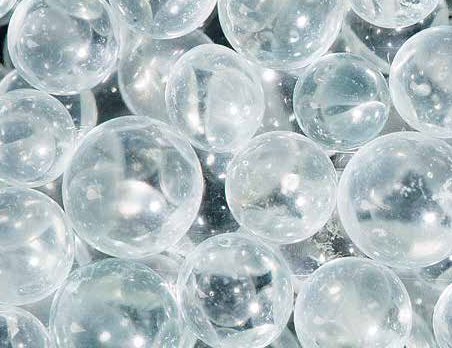
Glass beads are a blasting media made up of spherical glass particles. Unlike angular abrasives, they work by impact rather than by cutting the surface, giving a smoother, satin-like result. In this article we explain where glass bead blasting is used, which settings to watch for a good result and its limitations.
What are glass beads?
Glass beads are usually produced by melting soda-lime glass and forming it into spheres. Thanks to their spherical shape, when they strike the surface they lightly compact and smooth it rather than removing material.
- Hardness: Mohs 5.5 – 6
- Density: approximately 2.5 g/cm³
- Grain ranges: from 0.04 – 0.07 mm (very fine finish) to 0.42 – 0.84 mm (stronger cleaning)
For general properties of glass microspheres, see the Wikipedia article on glass microspheres.
Where are glass beads used?
- Decorative satin finish on stainless steel and aluminium
- Cleaning machine parts and moulds
- Removing burrs and light oxide
- Light surface peening on some parts
- Removing heat tint after welding
They are often preferred on stainless surfaces because there is no risk of iron contamination. For details, see our article on stainless steel blasting.
Surface appearance by grain size
| Grain range (mm) | Result |
|---|---|
| 0.04 – 0.07 | Very fine finish |
| 0.07 – 0.11 | Fine satin finish |
| 0.15 – 0.25 | General satin finish |
| 0.25 – 0.42 | General cleaning |
| 0.42 – 0.84 | Stronger cleaning |
Are glass beads and glass abrasive the same?
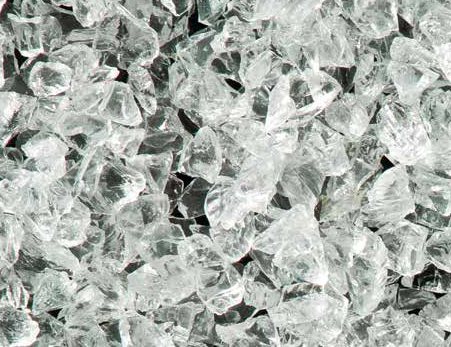
No. Glass beads are round and leave a smoother surface. Glass abrasive, on the other hand, is an angular material made from crushed glass and abrades the surface more. For details, read our article on glass beads vs glass abrasive.
Four settings for a better result
1. Grain size: Fine beads give a smoother appearance, coarse beads a more matt and pronounced texture. The choice should be made according to the desired appearance.
2. Pressure: High pressure breaks the beads faster and can change the appearance. Starting with the lowest effective setting protects both quality and media life.
3. Angle and distance: Regular movements with a constant angle and distance reduce blotches or stripes on the part.
4. Media cleanliness: Accumulated broken beads can spoil the appearance. The screening and dust separation set-up should therefore be checked, and new media added when necessary.
Limitations
Glass beads are generally not the first choice for removing thick rust, mill scale or hard coatings. Angular abrasives such as aluminium oxide are more suitable for these jobs. They may also be insufficient on their own when a pronounced profile is required for paint adhesion.
Which abrasive for which job?
- Satin, uniform decorative finish: Glass beads
- Stripping paint without damaging the substrate: plastic granules
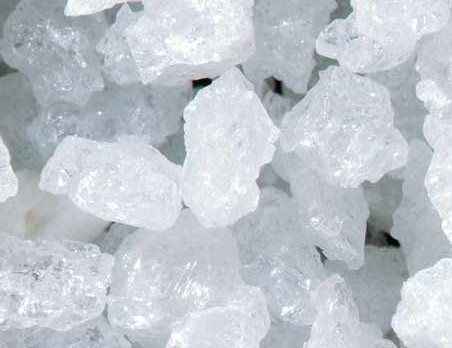
- Pronounced profile before coating: White aluminium oxide or garnet
- Thick rust and mill scale: Brown aluminium oxide or steel grit
In some jobs a two-step process gives the best result: cleaning first with an angular abrasive, then evening out the appearance with glass beads.
The importance of sampling
In decorative work, the result depends on the part material, the previous surface treatment and the settings. Preparing a sample and getting approval before starting series work saves time and cost.
Frequently Asked Questions
How many times can glass beads be used?
With suitable pressure and a recovery system, they can be used more than once. Regularly removing broken beads is important to maintain surface quality.
Are glass beads used before painting?
Because glass beads do not create a pronounced profile, they are generally not sufficient on their own for jobs requiring paint adhesion. Angular abrasives are preferred for these jobs.
Do glass beads leave marks on stainless steel?
With the right pressure and grain size, they leave a uniform satin surface. High pressure or irregular movement can cause blotches and stripes on the surface.
Request a quote for glass beads
If you share the desired surface appearance and part material, we can determine the right grain range together. Contact us via the quote form.