
Steel grit is one of the most widely used metallic abrasives for surface preparation before coating. Its angular grains cut the surface and create a pronounced profile for paint and coatings to grip, and its high density delivers powerful cleaning. In this post we answer what is steel grit, how to read its hardness classes and sizes, where it is used and how to use it efficiently in cabinets and wheel blast machines.
What is steel grit?
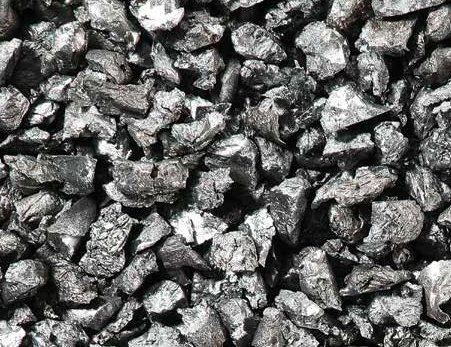
Steel grit is an angular abrasive made by crushing carbon steel shot. After crushing, the grains are heat-treated to the required hardness and screened into size groups. Typical values from our product page:
- Material: carbon steel
- Grain shape: angular
- Hardness: 40 – 68 HRC (390 – 740 HV)
- Density: 7.8 g/cm³
For detailed technical data and chemical composition, see our steel grit product page.
Hardness classes
Steel grit is produced in different hardness classes, which the industry commonly refers to with letter codes such as GP, GL and GH. The difference between the classes determines how the grit behaves in use:
- Softer classes: the edges round off during use and the grit behaves more like shot. They can be preferred in wheel blast machines for cleaning with less machine wear.
- Medium classes: keep their angular shape longer and balance profile before coating against service life.
- Harder classes: stay sharp and create the most pronounced profile; preferred for stripping hard coatings and for pressure blasting.
Ask our sales team for the exact hardness range and the right class.
SAE sizes and grain size
Steel grit sizes are designated with SAE "G" codes; the higher the number, the finer the grain. The ranges on our product page:
| SAE code | Size range (mm) | Application |
|---|---|---|
| G-12 | 1.70 – 2.40 | Heavy cleaning |
| G-16 | 1.20 – 1.70 | General surface preparation |
| G-25 | 0.70 – 1.20 | Medium profiling |
| G-40 | 0.42 – 1.00 | Fine cleaning |
| G-80 | 0.18 – 0.40 | Fine surface work |
Coarse grains give a deeper profile and faster cleaning; fine grains give a smoother surface. Details are in our post on grain size selection.

Where is it used?
- Removing rust, paint, epoxy and rubber coatings
- Creating a profile before painting and coating
- Surface preparation of ships, bridges and steel structures
- Deburring and finishing castings
For the difference from shot and when to choose which, see steel shot vs steel grit.
Efficient use in cabinets and wheel blast machines
- Recycling is a must: to be economical, steel grit must be used in a recycling system. It is not suited to single-use outdoor jobs.
- Tune the separator: if dust and broken fines are not removed regularly, surface quality and speed drop. Details are in our post on abrasive recycling.
- Top up regularly: adding as much new grit as is consumed keeps the size distribution of the mix, and the result, consistent.
- Keep it dry: moisture makes steel grit rust and clump.
Important: carbon steel grit can cause iron contamination on stainless steel and aluminium. On these surfaces, alternatives such as stainless steel grit should be used. For a general overview of blasting methods, see the Wikipedia article on abrasive blasting.
Frequently asked questions
Can steel grit be reused?
Yes. It can be used for many cycles in cabinets or wheel blast machines with a suitable recycling system. The exact number of cycles depends on the hardness class, the parts and the machine settings.
Is steel grit used outdoors?
It is technically possible, but it is not economical if the material cannot be collected and recycled. Outdoor jobs usually use mineral abrasives such as garnet or aluminium oxide.
Which steel grit size should I choose?
The choice depends on the required profile and the coating to be removed. We recommend starting from the profile value required by the paint manufacturer and running a trial on a sample part.
Get a quote for steel grit
Tell us about your machine, the parts you process and the profile you need, and we will choose the right class and size together. See our steel grit product page or fill in the quote form for pricing.