
Silicon carbide is very rare in nature; almost all the silicon carbide used in blasting, sandpaper and grinding is made synthetically. Production is still based on the Acheson furnace developed at the end of the 19th century. In this post we explain how silicon carbide is made, step by step from raw material to sieved abrasive grain. For the properties of the material, see what is silicon carbide.
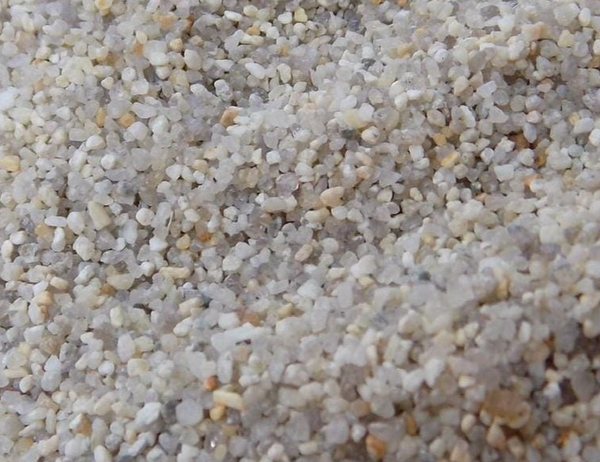
Raw materials: silica sand and carbon
Silicon carbide has two main raw materials:
- Silica sand: high-purity quartz sand is the silicon source.
- Carbon source: usually petroleum coke; it provides the carbon.
- Additives: some producers add other materials to improve gas permeability of the mix or remove impurities.
The purity of the raw materials directly affects the colour and purity of the silicon carbide produced. The mix is prepared in set proportions and loaded into the furnace.
One advantage of synthetic production is that quality can be controlled. When the raw material ratio, furnace cycle and sorting care are kept the same, grain with similar properties is obtained from batch to batch. For blasting shops this means consistent results with the same machine settings and more predictable abrasive consumption.
How does the Acheson furnace work?
The Acheson furnace is a resistance furnace. A graphite core running between two electrodes is placed in the middle, and the raw material mix is piled around it. When a high current passes through the core, it heats up through resistance and brings the surrounding mix to very high temperatures. At this temperature silica and carbon react to form silicon carbide crystals, releasing carbon monoxide gas.
A production cycle takes a long time, and the furnace also needs time to cool after heating. For the history and working of the method, see the Wikipedia article on the Acheson process.
Opening the furnace and the crystal zones
When the cooled furnace is dismantled, distinct layers are seen around the graphite core:
- Zone nearest the core: the largest and purest silicon carbide crystals form here; this is the main source for abrasive production.
- Intermediate zone: smaller crystals and lower-purity material; usually sorted into different quality classes.
- Outer layer: mix that has not fully reacted; often reused in the next furnace charge.
These zones are sorted by hand or mechanically. The care taken in sorting is one of the steps that determine the purity and grain quality of the final product.
Crushing, washing and sieving
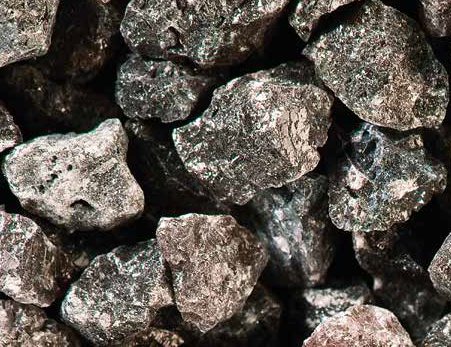
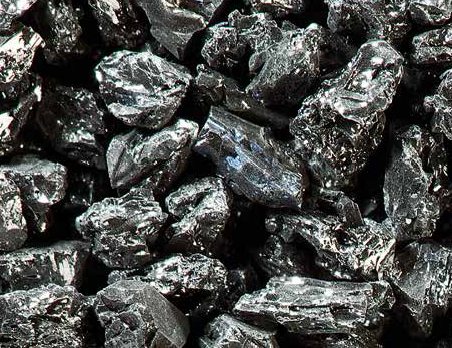
The sorted lumps of silicon carbide are crushed step by step. Silicon carbide is very hard and brittle; when crushed it gives angular grains with sharp edges. Our product page also describes the grain shape of black silicon carbide as "angular and sharp" and gives its hardness as 9–9.5 on the Mohs scale.
- Crushing and milling: grains are brought to the required size range.
- Washing and chemical cleaning: free carbon, silica and metallic impurities are removed.
- Magnetic separation: iron particles from the crushing equipment are removed.
- Sieving: grains are classified into FEPA macrogrit numbers; our product page gives, for example, 212–300 µm for F60 and 45–75 µm for F220.
We explain the general logic of choosing a grit number in our grain size selection guide.
Why black and green silicon carbide are separated
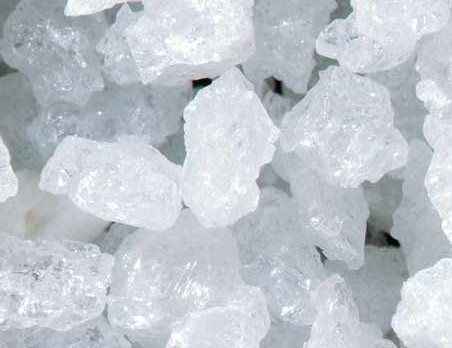
Both are made by the same basic method; the difference comes from the purity of the raw materials and the furnace conditions. Silicon carbide made from purer raw materials is green and of higher purity; black silicon carbide contains more impurities and has a slightly tougher structure. As a blasting abrasive, our range includes black silicon carbide. We cover the difference in use in what is silicon carbide.
How production affects blasting performance
The production process directly determines several properties you notice in blasting:
- Sharpness: angular grains after crushing cut hard surfaces fast; as they break in use, new sharp edges form.
- Purity: well-sorted and washed product has little free carbon and dust; the surface stays cleaner.
- Size distribution: correctly sieved product gives a more even surface profile.
You can read how silicon carbide is used on glass, stone, ceramics and hard metals in silicon carbide uses, and its hardness compared with aluminium oxide in aluminium oxide hardness.
Frequently asked questions
Is silicon carbide natural or synthetic?
Because it is very rare in nature, almost all industrial silicon carbide is synthetic. It is made by reacting silica sand with a carbon source such as petroleum coke in an electric resistance furnace.
What is the Acheson furnace?
A resistance furnace with a graphite core between two electrodes in the middle. The current through the core heats the surrounding silica and carbon mix and forms silicon carbide crystals.
Why does silicon carbide break so sharply?
Silicon carbide is very hard and brittle. During crushing and in blasting it breaks into sharp-edged pieces, which gives fast cutting on hard surfaces.
Get a quote for silicon carbide
Tell us the material you process, your equipment and the surface you need, and we will choose the right grit number together. Browse all products on the products page or fill in the quote form for black silicon carbide pricing.