
Hardness is one of the first properties to check when choosing an abrasive: it determines how easily the grain cuts the surface and which materials it can work on. In this post we explain aluminium oxide hardness, how to read the Mohs scale, how hardness affects blasting results and how aluminium oxide compares with silicon carbide.
How hard is aluminium oxide?
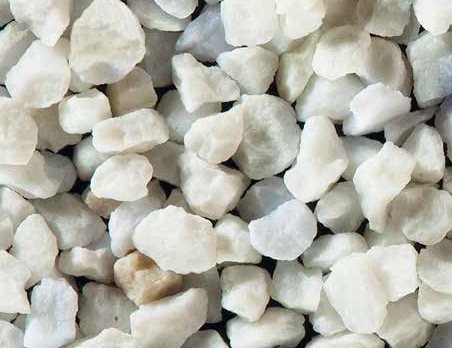
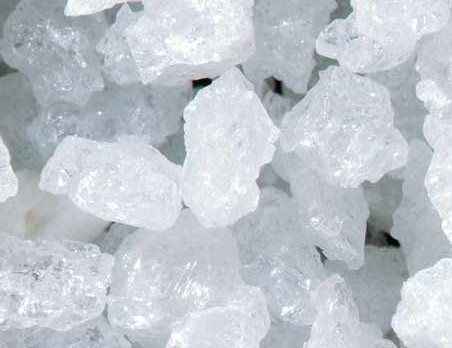
Aluminium oxide (Al₂O₃) occurs in nature as the mineral corundum and has a hardness of 9 on the Mohs scale. Our product pages also give a Mohs value of 9 for white aluminium oxide and brown fused alumina. This places aluminium oxide among the hardest abrasives used in blasting; common harder abrasives include silicon carbide and diamond.
The difference between the white and brown grades lies more in purity and toughness than in hardness. We cover this in detail in white vs brown aluminium oxide.
How to read the Mohs scale
The Mohs scale ranks minerals by their ability to scratch one another. Talc, the softest mineral, is 1 and diamond, the hardest, is 10; corundum is the reference mineral for 9. For details, see the Wikipedia article on the Mohs scale.
- It is an ordinal scale: the steps are not equal. The gap between 9 and 10 is far larger than the gaps lower down.
- It shows scratch hardness: a harder material scratches a softer one. In blasting, this means the abrasive can cut the surface.
- Engineering uses other scales too: methods such as Vickers and Knoop measure hardness numerically, and you may see these values on technical data sheets.
How does hardness affect blasting results?
A hard, angular grain cuts material on impact before it breaks. Hardness therefore directly affects blasting speed and the surface profile produced:
- Faster cleaning: hard layers such as rust, mill scale and old paint come off more quickly.
- A clear profile: hard, angular grains readily create the roughness a coating needs to grip.
- Effective on hard surfaces: on hardened steel or hard castings, softer abrasives fall short while aluminium oxide keeps cutting.
- Toughness matters too: hardness alone is not enough. The tougher the grain, the later it breaks and the more times it can be reused.
Hardness compared with silicon carbide
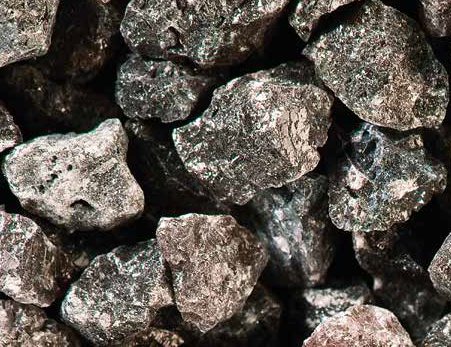
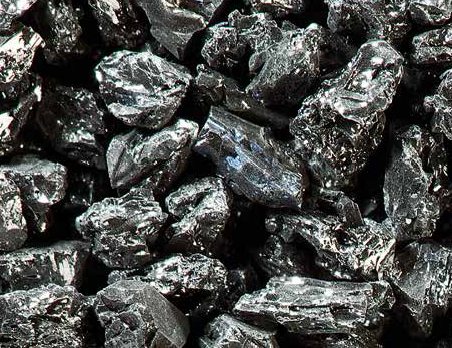
When an abrasive harder than aluminium oxide is needed, the first choice is usually black silicon carbide. Our product page gives silicon carbide a Mohs value of 9 – 9.5. The main differences are:
- Hardness: silicon carbide is slightly harder and cuts faster.
- Friability: silicon carbide is more brittle; it forms new sharp edges as it breaks but also breaks down faster. Aluminium oxide is tougher.
- Density: according to our product pages, silicon carbide is about 3.2 g/cm³ and aluminium oxide about 3.9 g/cm³. A heavier grain carries more energy on impact.
- Use: silicon carbide is more common on glass, stone, ceramics and very hard materials; aluminium oxide on metal surface preparation.
For the other properties of silicon carbide, see what is silicon carbide.
Is hardness always an advantage?
No. A hard abrasive is not the right choice for every surface:
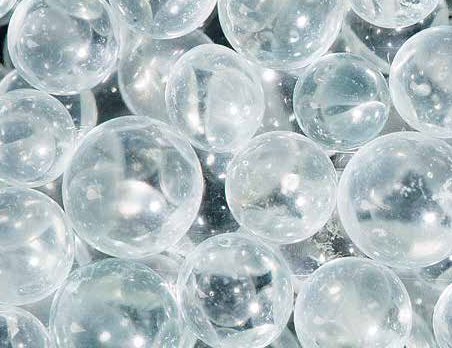
- Soft metals: on aluminium, copper and brass, hard grains can leave deep marks or embed in the surface. Glass beads suit appearance work and plastic media suits paint stripping better.
- Too much profile: an overly coarse, hard grain can create a deeper profile than the coating needs.
- Equipment wear: hard abrasives wear nozzles, hoses and cabinet parts faster. Use wear-resistant nozzles and check the nozzle bore regularly.
We explain abrasive choice for soft metals in how to blast aluminium.
Consider hardness together with grain size and pressure
Hardness alone does not decide the blasting result. The same aluminium oxide gives a deep profile and fast cleaning with a coarse grain at high pressure, and a controlled matt finish on delicate parts with a fine grain at low pressure. So first choose an abrasive with the right hardness for the material, then set grain size and pressure for the surface you need. Testing on a small sample is the most reliable step before series work. We explain the logic of grain size in our grain size selection guide.
Frequently asked questions
What is the Mohs hardness of aluminium oxide?
Aluminium oxide has a Mohs hardness of 9. The mineral corundum is the reference mineral for 9 on the Mohs scale.
Which is harder, aluminium oxide or silicon carbide?
Silicon carbide is slightly harder; our product page gives it as Mohs 9 – 9.5. Aluminium oxide, on the other hand, is tougher, breaks down later and is more widely used for metal surface preparation.
Does a harder abrasive always give a better result?
No. A hard abrasive cuts fast but can mark soft metals, create too much profile and wear equipment faster. The choice should depend on the surface material and the result required.
Let us choose the right hardness together
Tell us the material you blast and the surface you need, and we will decide together whether aluminium oxide, silicon carbide or a softer abrasive is right. Browse all products on the products page or fill in the quote form for pricing.