
Silicon carbide is one of the hardest abrasives used in blasting. Its sharp grains cut quickly on hard materials where aluminium oxide is slow. In this post we answer the questions what is silicon carbide, how is it made, what is the difference between the black and green types, where is it used in blasting and what to consider when choosing it.
What is silicon carbide?
Silicon carbide (SiC) is a synthetic material made of silicon and carbon. Because it is very rare in nature, almost all silicon carbide used in industry is manufactured: high-purity silica sand and a carbon source (usually petroleum coke) react at very high temperatures in electric furnaces, and the resulting mass is crushed and screened. Thanks to its hardness, it has long been used for abrasive work such as sandpaper, grinding and blasting. For general information on its chemistry and production, see the Wikipedia article on silicon carbide.
Black and green silicon carbide
Silicon carbide used as an abrasive usually comes in two types:
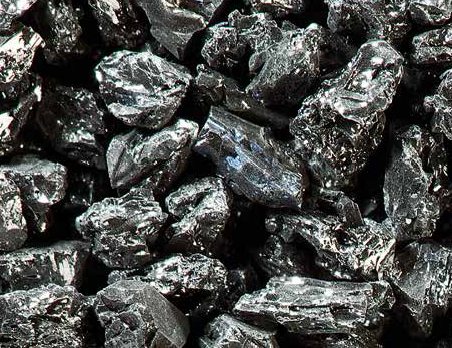
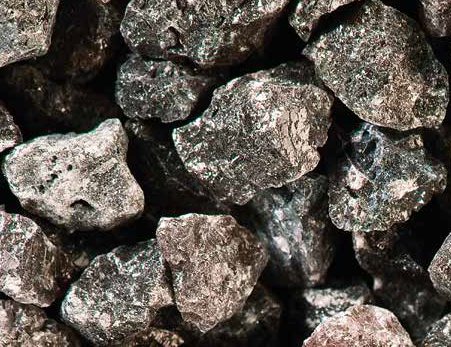
- Black silicon carbide: the most common type for blasting and general abrasive work. It has hard, sharp and brittle grains.
- Green silicon carbide: produced at a higher purity; usually preferred for special applications such as grinding, honing and precision finishing.
For blasting work, our range includes black silicon carbide.
Technical properties
Typical values from our product page:
- Hardness: 9 – 9.5 on the Mohs scale
- Density: ~3.2 g/cm³
- Colour: black
- Grain shape: angular and sharp
The most distinctive feature of silicon carbide is its brittleness. As grains fracture during use, new sharp edges form, which keeps the cutting power. The same property also means the grains break down faster than hard, tough abrasives.
Where is it used in blasting?
- Processing and matting glass, stone and ceramic surfaces
- Surface preparation of hard metals and castings
- Removing hard coatings
- Manufacturing sandpaper and abrasive products
Silicon carbide is preferred especially on hard materials where aluminium oxide is insufficient or slow. Because suitability depends on the material and the desired surface, run a trial on a sample part before starting series work.
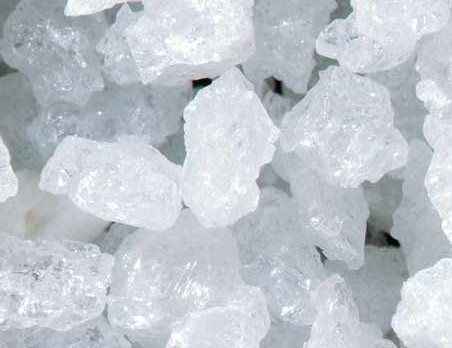
Silicon carbide vs aluminium oxide
Both materials are hard and angular, but they behave differently.
| Property | Black silicon carbide | Aluminium oxide |
|---|---|---|
| Hardness | Mohs 9 – 9.5 | Mohs 9 |
| Density | ~3.2 g/cm³ | ~3.9 g/cm³ |
| Grain structure | Very sharp, brittle | Sharp; the brown type is tougher |
| Typical jobs | Glass, stone, ceramics, hard materials | Steel surface preparation, stainless steel, general blasting |
In most steel surface preparation jobs, brown aluminium oxide lasts longer thanks to its tougher structure. For the difference between the two types, see white vs brown aluminium oxide, and for an overview of all types, types of blasting abrasives.
Grit size (FEPA) selection
Like aluminium oxide, silicon carbide is graded with FEPA "F" codes; the higher the number, the finer the grain.
| FEPA code | Size range (µm) | Application |
|---|---|---|
| F 24 | 600 – 850 | Heavy surface preparation |
| F 60 | 212 – 300 | General blasting |
| F 120 | 90 – 125 | Fine surface work |
| F 220 | 45 – 75 | Very fine work |
The general logic of grain size selection is explained in our post on grain size selection.
Points to watch in use
- Account for consumption: brittle grains break down faster. Compare costs by consumption per square metre, not by the price per kilo.
- Tune the recycling: in recycling systems, removing fines regularly keeps the cutting power. Details are in our post on abrasive recycling.
- Check the nozzle: very hard abrasives wear the nozzle faster. Use a wear-resistant nozzle and measure its bore regularly.
- Start at low pressure: especially on glass and ceramics, increase pressure gradually until you reach the desired surface.
Frequently asked questions
Is silicon carbide silica?
No. Although the names are similar, silicon carbide (SiC) is a compound of silicon and carbon; it is not a free crystalline silica abrasive like quartz sand. Still, every abrasive creates dust: review the product’s safety data sheet and use suitable respiratory protection. Details are in our post on safety in abrasive blasting.
Silicon carbide or aluminium oxide?
On glass, stone, ceramics and very hard materials, silicon carbide cuts faster. For steel surface preparation and general blasting, aluminium oxide is often more economical thanks to its tougher structure and lower consumption.
Can silicon carbide be reused?
It can be used more than once with a suitable recycling system. However, because it is brittle, the number of reuse cycles is usually lower than with tougher abrasives such as aluminium oxide.
Get a quote for silicon carbide
Tell us about the material you will process, the surface you need and your blasting system, and we will choose the right FEPA grit size together. See our black silicon carbide product page or fill in the quote form for pricing.