
When people say "blasting sand", they often think of a single material, yet there are dozens of abrasives on the market with very different structures, hardness levels and uses. Choosing the right one directly determines the speed of the job, the quality of the surface and the total cost. In this post we group the types of blasting abrasives into three families: mineral, metallic and plastic. We briefly explain the key features of each group and the jobs they are chosen for.
How are blasting abrasives grouped?
The most practical way to classify abrasives is by the origin of the material:
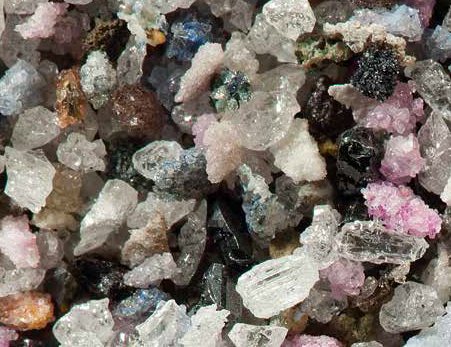
- Mineral abrasives: natural or synthetic mineral-based materials such as aluminium oxide, garnet, silicon carbide, glass, basalt and quartz.
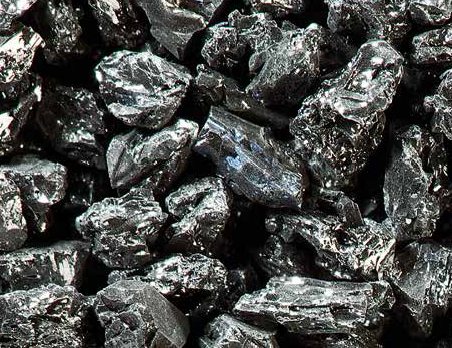
- Metallic abrasives: steel shot, steel grit, cut wire and stainless grades. They are usually used in recycling systems.
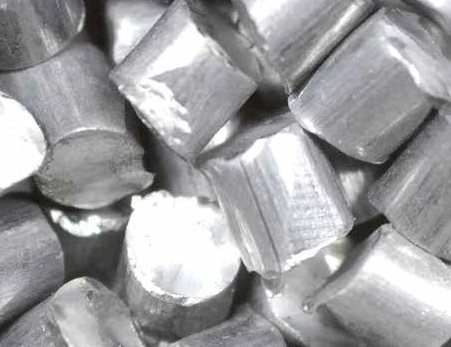
- Plastic abrasives: soft polymer grains used to strip coatings without damaging the underlying surface.
Within these three groups there are two further important distinctions: grain shape (angular or round) and hardness. Angular grains cut the surface and create a profile; round grains clean by impact and leave a more uniform texture.
Mineral abrasives
Mineral abrasives form the largest group and include the types most commonly used in pressure blasting.
- White aluminium oxide: with its high purity and iron-free structure, it is preferred for stainless steel, aluminium and precision surface work.
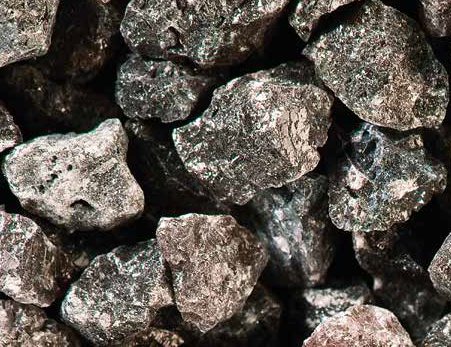
- Brown aluminium oxide: its hard, angular grains and wide range of sizes make it a common choice for removing rust, paint and mill scale. Mixed alumina is a blend of aluminium oxide types for general-purpose blasting.
- Garnet: a natural, almandine-based mineral used for blasting and abrasive waterjet cutting.
- Black silicon carbide: the hardest material in this group; its sharp grains are used on demanding, hard surfaces.
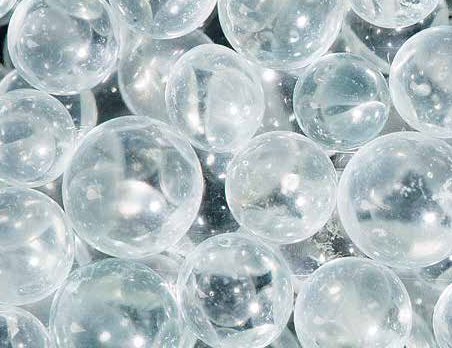
- Glass abrasive and glass beads: glass abrasive is angular and used to remove paint and dirt; glass beads are spherical and leave a satin finish.
- Basalt sand: an economical, metal-free, general-purpose abrasive of volcanic origin.
- Quartz sand: natural silica sand. Because of the risk of free crystalline silica, it should only be used with suitable protection and systems.
Metallic abrasives
Thanks to their high density, metallic abrasives deliver a strong impact and can be used for many cycles in the right system. That is why they stand out in wheel blast machines and recycling cabinets.
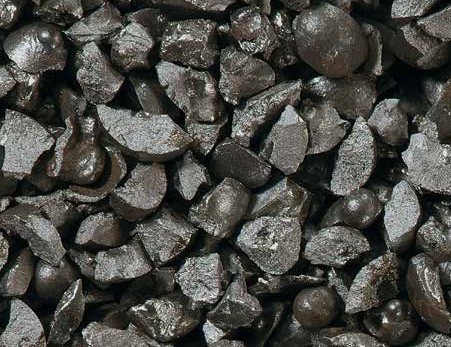
- Steel shot: applies controlled impact with round grains; used for cleaning castings and for surface hardening.
- Steel grit: its angular shape gives aggressive cleaning and creates a profile before coating. It is available in different hardness classes.
- Cylindrical cut wire shot and conditioned cut wire shot: grains cut from steel wire provide long-lasting cleaning; the rounded-edge conditioned type is also used for shot peening.
- Stainless steel shot and stainless steel grit: preferred on stainless and non-ferrous metals to prevent iron contamination.
Plastic abrasives
Plastic granules are much softer than mineral and metallic abrasives. Their purpose is not to create a deep profile but to remove the paint or coating on top without damaging the material underneath. They are used for mould cleaning, deburring and composite or thin metal parts. For details, see our post on plastic media blasting.
The types side by side
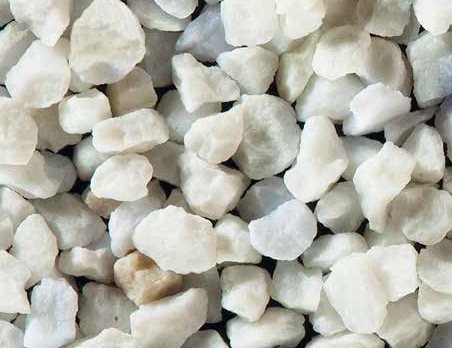
The values below are typical values from our product pages. Hardness is given on the Mohs scale for mineral and plastic materials and on the HRC scale for metallic materials; the two scales cannot be compared directly.
| Type | Grain shape | Hardness | Density |
|---|---|---|---|
| White / brown aluminium oxide | Angular | Mohs 9 | ~3.9 g/cm³ |
| Black silicon carbide | Angular and sharp | Mohs 9 – 9.5 | ~3.2 g/cm³ |
| Garnet | Angular | Mohs 7.5 – 8 | 3.9 – 4.2 g/cm³ |
| Glass abrasive | Angular | Mohs 5.5 – 6 | ~2.5 g/cm³ |
| Glass beads | Spherical | Mohs 5.5 – 6 | ~2.5 g/cm³ |
| Basalt sand | Angular – sub-angular | Mohs ~6 – 6.5 | ~2.8 – 3.0 g/cm³ (rock) |
| Steel grit | Angular | 40 – 68 HRC | 7.8 g/cm³ |
| Steel shot | Round | ~20 HRC (new) | ~7 g/cm³ |
| Cut wire shot | Cylindrical / rounded | ~40 – 65 HRC | ~7.8 g/cm³ |
| Plastic granules | Angular | Mohs ~3 – 4 | ~1.5 g/cm³ |
Grain ranges and grading systems for all products are listed on our products page.
Which type should you choose?
Three questions decide the choice: what is the surface, what result do you need and which system are you using?
- Outdoor pressure blasting: usually mineral abrasives such as garnet, aluminium oxide or glass abrasive.
- Wheel blast machine or recycling cabinet: metallic abrasives such as steel shot, steel grit and cut wire.
- Stainless steel and aluminium: white aluminium oxide, glass beads or stainless steel abrasives.
- Stripping coatings from delicate surfaces: plastic granules.
For step-by-step selection, see how to choose a blasting abrasive, and for grain size, grain size selection. For a general overview of blasting methods, the Wikipedia article on abrasive blasting is also a good source.
Frequently asked questions
What is the most commonly used blasting abrasive?
There is no single "most used" material; it depends on the job and the system. Garnet and aluminium oxide are common outdoors, steel shot and steel grit in wheel blast machines, and white aluminium oxide and glass beads on stainless surfaces.
What is the hardest blasting abrasive?
Among mineral abrasives, one of the hardest is black silicon carbide at Mohs 9 – 9.5, followed by aluminium oxide at Mohs 9. But the hardest material is not the best for every job; delicate surfaces need a softer abrasive.
Where can I buy blasting abrasives?
At Anadolu Kumlama we supply the mineral, metallic and plastic abrasives mentioned in this post. For grain size and quantity, contact us through our quote form.
Ask us about the right blasting abrasive
Tell us about your surface, the result you need and the system you use, and we will determine the right type and grain size together. You can browse all products on our products page or fill in the quote form for pricing.