
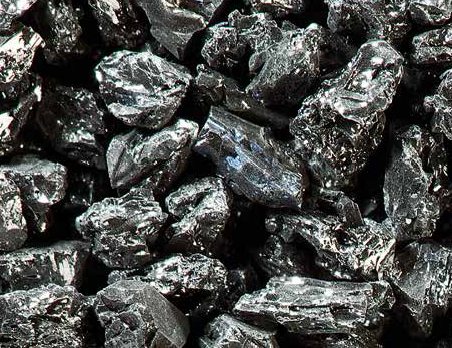
Thanks to its hardness and sharp, fracturing grains, silicon carbide is one of the oldest and most widely used materials in the abrasives industry. It appears everywhere from blast cabinets to abrasive paper, grinding wheels and precision lapping. In this post we cover silicon carbide uses in detail on the abrasive side, then briefly in industries beyond blasting.
We explained what the material is, its black and green types and its technical properties in what is silicon carbide; here the focus is on where and why it is chosen.
Why is it used in so many fields?
A few properties make silicon carbide so versatile:
- High hardness: it is hard enough to abrade glass, stone and ceramics.
- Brittle, sharp grains: as a grain fractures, new sharp edges form, so cutting power is kept during use.
- Heat resistance: it keeps its structure at high temperature, which makes it valuable beyond abrasives.
- Chemical stability: it does not react easily in many environments.
Some of these properties drive its use as an abrasive, others its use as a structural and electronic material.
Silicon carbide uses in blasting
In blasting, silicon carbide stands out on hard, brittle surfaces and in jobs where aluminium oxide is slow:
- Glass work: frosting glass and engraving patterns and lettering. In deep carving through a mask, the sharp grains advance quickly.
- Stone and memorial work: carving lettering and motifs through stencils on granite and marble, and texturing surfaces.
- Ceramics and technical ceramics: surface preparation, residue removal and roughening of ceramic parts.
- Hard metals and coatings: surface preparation and coating removal on hardened steel, hard alloys and hard-coated parts.
Because it is brittle, silicon carbide breaks down faster in use, so it is usually chosen for recycling cabinets and for hard surfaces where it pays off. See our black silicon carbide page for product details.
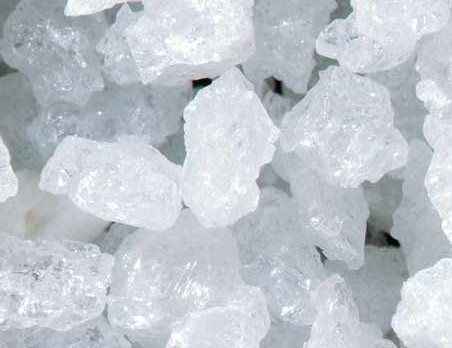
Use in abrasive paper and grinding products
Silicon carbide is one of the main raw materials of bonded and coated abrasives:
- Abrasive paper and cloth: common for sanding between paint coats and for stone, glass and non-ferrous metals; often seen in wet-and-dry papers.
- Grinding wheels: used to grind cast iron, non-ferrous metals, stone and ceramics.
- Sharpening and honing stones: its fine grades are used in sharpening and surface finishing.
For grinding tough metals such as steel, aluminium oxide based products are usually preferred. For the difference in blasting, see white vs brown aluminium oxide.
Lapping, polishing and cutting
Fine silicon carbide powder is also used as a loose abrasive. In lapping, the powder is mixed with a liquid and worked between the part and a lapping plate to produce flat, precise surfaces. Valve seats, sealing faces and the finishing of some stone and glass products are typical examples.
In some cutting processes, silicon carbide grains carried in a liquid cut hard, brittle materials. In these applications a narrow, uniform grain size matters; we explain the logic in our grain size selection guide.
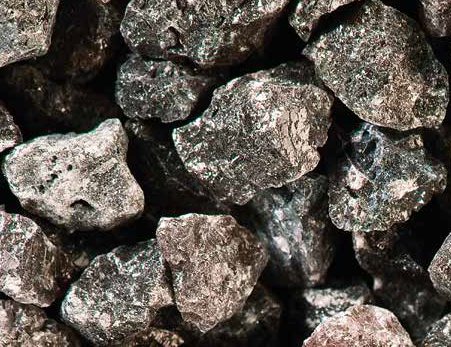
Uses beyond blasting
Its resistance to heat and chemicals makes silicon carbide valuable beyond abrasives. The materials used in these fields differ in form and purity from blasting grain; we list them briefly for a general picture:
- Refractories: furnace linings, kiln shelves and parts working at high temperature.
- Metallurgy: as an additive in foundry and steel production.
- Technical ceramics: wear-resistant parts such as seals, bearings and nozzles.
- Electronics: semiconductor devices working at high power and high temperature.
For general information on these fields, see the Wikipedia article on silicon carbide. The black silicon carbide in our range is intended for abrasive use.
Points to watch
- Test on a sample part before series work; a hard grain can leave deeper marks than needed on softer surfaces.
- Its brittle structure can increase dust; use effective dust extraction in the cabinet and suitable personal protective equipment. See safety in abrasive blasting.
- In recycling systems, remove fines regularly through the separator; see abrasive recycling.
Frequently asked questions
Where is silicon carbide used most?
On the abrasive side it is common in abrasive paper and grinding products, in blasting glass, stone and ceramics, and in lapping. Beyond abrasives it is used in refractories, metallurgy and electronics.
Is silicon carbide used for blasting steel?
It can be, but because it is brittle it usually wears out faster on steel. For most steel surface preparation, brown fused alumina is a tougher, more economical option; silicon carbide can be considered for hardened surfaces.
Silicon carbide or aluminium oxide for glass blasting?
For glass and stone work that needs fast, deep cutting, the sharp grains of silicon carbide stand out. For a more controlled, even matt surface, fine aluminium oxide can also be used; testing on a sample gives the best answer.
Get a quote for silicon carbide
Tell us the material you work on, your equipment and the surface you need, and we will choose the right abrasive and grain size together. Browse all products on the products page or fill in the quote form for pricing.