

You do not need a large blast pot to clean small parts in the workshop, give an engine cover a matt finish or remove rust from a few bolts; a blasting gun connected to a compressor is often enough. But these guns run on limited airflow, so they do not work well with every abrasive. In this post we explain how to choose an abrasive for blasting guns by gun type, compressor and job.
Types of blasting guns
Guns used for small jobs feed the abrasive in different ways, which determines which abrasive flows easily:
- Siphon (suction) gun: uses the vacuum created by compressed air to draw abrasive from a hose or container. The most common type in cabinets and hobby kits; it likes fine, dry abrasive.
- Gravity gun: abrasive falls from a hopper on top under its own weight. The hopper is small; suited to short, spot jobs.
- Pressure pot system: abrasive is carried in a pressurised tank; more powerful but beyond the small-job class. For selection by machine type, see abrasives for blasting machines.
Compressor and grain size
In siphon and gravity guns, abrasive speed depends on how much air the compressor can deliver continuously. Workshop compressors usually deliver limited airflow, so coarse, heavy grains cannot accelerate enough, pile up in the hose and hit the surface weakly.
- Fine and medium grains flow more evenly at low airflow and sweep the surface with more grains.
- Light abrasives (glass beads, plastic media) are carried more easily by the same air.
- If a coarse grain is needed, you usually need a more powerful pressure system rather than a gun.
Always check the manufacturer’s recommendations for your compressor and gun. For grain size designations, see our grain size selection guide.
Which abrasive goes in a blasting gun?
The most popular abrasives for small jobs are:
- Glass beads: clean without cutting a profile and give an even satin look. The typical sizes on our product page range from very fine finishing to satin surfaces; one of the most trouble-free abrasives in guns.
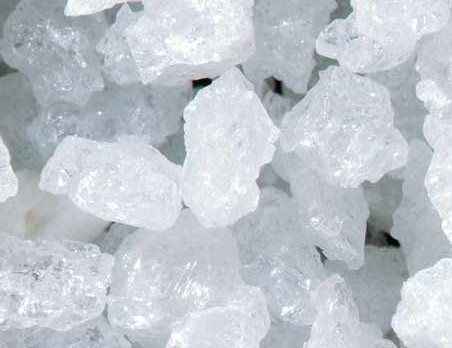
- White aluminium oxide: hard and angular; with a fine grain it removes rust and old paint and cuts a profile before painting. Being iron-free, it can also be used on aluminium and stainless.
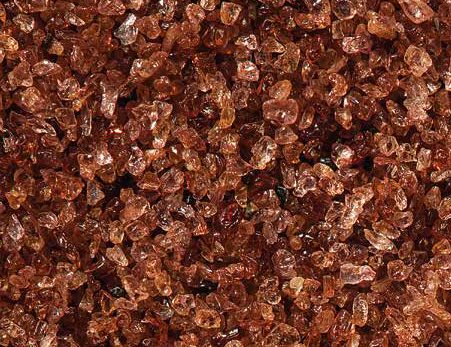
- Garnet: low dust and balanced cutting power; fine mesh options work well in guns.
- Plastic media: strips paint without abrading the base material; being light, it is carried even at low airflow.
Moisture and clogging: the most common problem
The most frequent problem with blasting guns is abrasive not flowing and the gun clogging. The usual causes are:
- Moist air: compressor air carries water and the abrasive clumps. Use a water separator and filter and drain the tank regularly.
- Moist abrasive: abrasive left open absorbs moisture. Store it closed and dry.
- Too coarse or irregular grains: grains too coarse for the nozzle bore stop the flow.
- Dirt and foreign matter: sieve recycled abrasive in a cabinet; paint flakes and debris block the nozzle.
These and similar mistakes are covered in common abrasive blasting mistakes.
Cabinet or open area?
Working with a gun in the open scatters abrasive, fills the area with dust and makes recovery difficult. For small parts, a blasting cabinet keeps dust under control and lets the abrasive be sieved and reused. Glass beads and aluminium oxide can be reused several times in a cabinet; details are in recycling blasting abrasive. For a general overview of blasting, the Wikipedia article on abrasive blasting is also a good source.
Safety: small job, same risk
Even a short job with a gun creates dust. Do not use building sand, river sand or other sands containing silica for blasting; respirable silica dust is a serious health risk. Even in a cabinet, use eye protection, gloves and suitable respiratory protection. Details are in safety in abrasive blasting.
Frequently asked questions
What abrasive goes in a blasting gun?
Glass beads, fine white aluminium oxide, fine mesh garnet and plastic media are used for small jobs. The choice depends on the surface and result: glass beads for a satin look, aluminium oxide or garnet for rust and paint, plastic media for gentle paint stripping.
Why does a blasting gun clog?
The most common causes are moist air, damp or clumped abrasive, grains too coarse for the nozzle and dirt in recycled abrasive. Using a water separator, storing abrasive dry and sieving it largely solves the problem.
Can building sand be used in a blasting gun?
It should not be. Building and river sands may contain free silica and create respirable dust. Their moisture and irregular grains also clog the gun.
Get a quote for blasting gun abrasives
Tell us your gun type, your compressor and the parts you blast, and we will choose the right abrasive and grain size together. Browse all products on the products page or fill in the quote form for pricing.