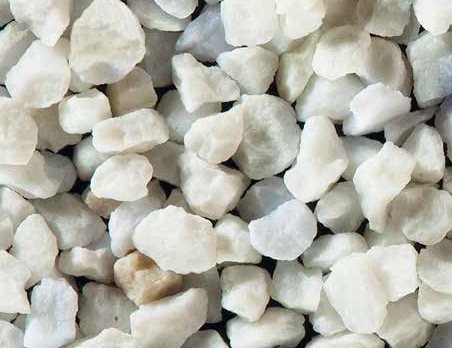

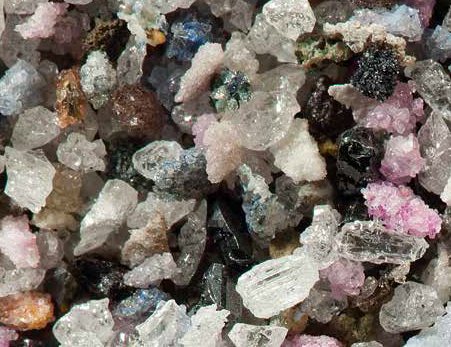
Aluminium oxide (corundum) is one of the most widely used abrasives in industry, thanks to its hardness, chemical stability and the fact that it can be produced in many grain sizes. The same material can cut a profile under paint in a blast cabinet and, as a fine powder, help produce a mirror finish in polishing. In this post we cover the main aluminium oxide uses, from blasting to polishing.
We discuss the difference between the white and brown types in detail in white vs brown aluminium oxide; here we focus less on the types and more on where and why it is used.
Why is it used in so many fields?
A few core properties make aluminium oxide so versatile:
- High hardness: it easily abrades steel, cast iron, stainless steel and many hard materials.
- Angular, self-sharpening grains: as grains fracture, new sharp edges form and the cutting action continues.
- Chemical stability: it does not react with the surface; the white type contains no iron and causes no iron contamination.
- Wide grain range: it can be produced from coarse blasting grains down to micron-level polishing powders.
For a general overview of its chemical and physical properties, see the Wikipedia article on aluminium oxide.
Abrasive blasting and surface preparation
The best-known use of aluminium oxide is pressure blasting. Its angular grains remove rust, mill scale, old paint and dirt while creating the profile that coatings grip. Typical applications:
- Steel surface preparation before paint, powder coating and industrial coatings
- Iron-free profiling of stainless steel and aluminium
- Surface activation before thermal spraying (metallising) and bonding
- Removing sand, scale and oxides from castings
- Cleaning moulds, machine parts and weld seams
Because aluminium oxide can be recovered and reused several times in a cabinet, it is an economical choice in closed systems. For stainless applications, see stainless steel blasting.
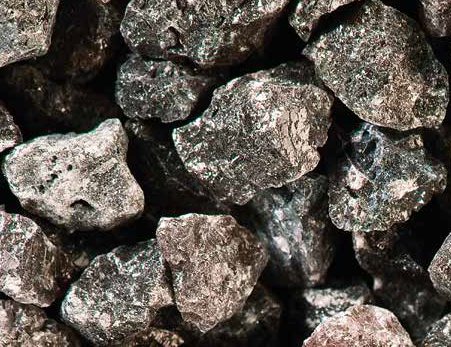
Sandpaper and grinding products
Outside blasting, a large share of aluminium oxide is used as the raw material for coated and bonded abrasives:
- Coated abrasives: in sandpaper, abrasive cloth, belts and discs the grains are bonded to a backing.
- Bonded abrasives: in grinding wheels, cutting and grinding discs and honing stones the grains are shaped with a bond.
- Metalworking: grinding steel and ferrous materials, deburring and edge finishing.
The grain in these products is the same material as blasting grain, but its size distribution and shape are chosen for the product’s purpose.
Lapping and polishing
Very fine aluminium oxide powders are used to remove tiny amounts of material in a controlled way. In lapping and polishing the powder is carried in a liquid or paste and applied to the surface of the part:
- Lapping metal parts for flatness and dimensional accuracy
- Final polishing in metallographic sample preparation
- Polishing stone, marble, glass and ceramic surfaces
The micro powders used here are a different class from blasting products; the aim is not to cut a profile but to bring the surface to an ever finer texture.
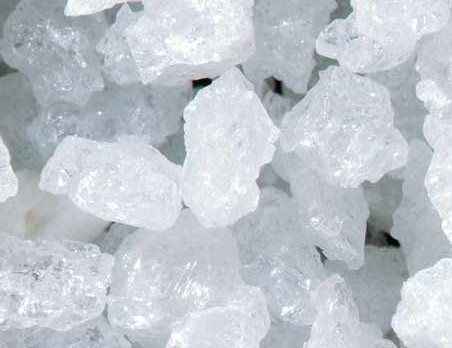
Precision and special applications
Fine white aluminium oxide is also used where a controlled, clean surface is needed:
- Dental laboratories: blasting prostheses and crowns before bonding or veneering.
- Glass, stone and ceramics: frosting, patterns and lettering.
- Electronics and precision mechanics: deburring and cleaning small parts (micro blasting).
- Mould maintenance: creating a controlled matt texture on mould surfaces.
These jobs usually call for fine grain ranges. Our grain size selection guide helps you pick the right one.
Which aluminium oxide for which job?
In short, by application:
- Brown aluminium oxide: steel surface preparation, rust and paint removal, general blasting.
- White aluminium oxide: stainless steel, aluminium, dental and precision work; surfaces where iron contamination is unwanted.
- Mixed alumina: used for general-purpose blasting, rust and paint removal and profiling before coating.
To compare it with other blasting abrasives, see types of blasting abrasives.
Frequently asked questions
Where is aluminium oxide used most?
As an abrasive, its most common uses are blasting and surface preparation, and sandpaper and grinding products. Its fine powders are used for lapping and polishing, and the fine white type for dental and precision work.
How many times can aluminium oxide be reused in blasting?
It can be recovered and reused several times in closed cabinets. How many times depends on the type, grain size, pressure and surface; dust and undersized grains should be removed by screening.
Can aluminium oxide be used on stainless steel?
Yes. White aluminium oxide in particular contains no iron, so it is a common choice for profiling stainless steel and aluminium without iron contamination.
Get a quote for aluminium oxide
Tell us your application, the material you work on and your equipment, and we will choose the right type and grain size together. Browse all products on the products page or fill in the quote form for pricing.