
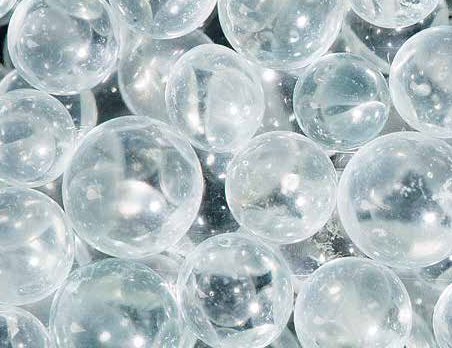
Glass beads are an abrasive whose round grains clean the surface and give a satin look without cutting a profile. The smaller the size range, the finer and smoother the surface looks. In this post we explain fine glass beads, also called micro glass beads, which jobs they are preferred for and what to watch for to use them efficiently.
What are micro glass beads?
Micro glass beads is the name given to the finest size ranges of standard glass beads. The material is the same: spherical grains made from soda-lime glass. The difference is size. Among the typical ranges listed on our glass beads product page, 0.04 – 0.07 mm is used for a very fine finish and 0.07 – 0.11 mm for a fine satin surface. Coarser ranges are used for general satin finishing and cleaning.
We describe the general properties and use of glass beads in glass bead blasting; this post focuses on what fine grains change. For a general definition of bead blasting, see the Wikipedia article on bead blasting.
What does a fine grain change on the surface?
- A finer, more even look: small grains leave denser, shallower marks; the result is a silkier satin finish.
- Reaching fine details: narrow channels, fine lettering and small recesses are easier to process than with coarse beads.
- Almost no effect on dimensions: glass beads do not noticeably change part dimensions anyway; fine grains make this even more valuable on precision parts.
- Lower cleaning power: each grain carries little energy, so they are not suitable for removing thick dirt, paint or rust.
Where are micro glass beads used?
- A fine satin finish on small, delicate stainless steel and aluminium parts
- An even matt look on decorative parts with visible surfaces
- Gentle cleaning of mould surfaces with fine detail
- Removing weld discolouration on small parts
- Surface compaction (glass bead peening) on small parts
You can find why a fine satin finish is preferred on stainless steel in our post on stainless steel blasting.
When to use another abrasive instead
Micro glass beads are a finishing abrasive. In these cases another abrasive gives a better result:
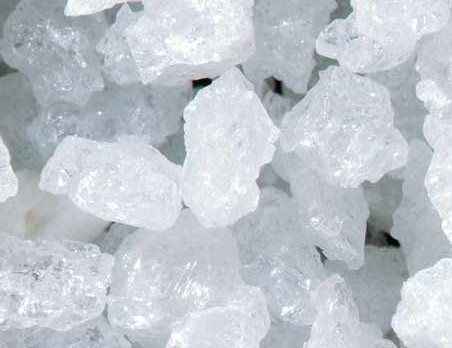
- If a profile is needed before paint or coating: beads do not cut a profile; use fine white aluminium oxide.
- If paint must be stripped: consider plastic media for gentle stripping.
- If there is heavy dirt and oxide: clean first with a coarser grain, then finish with fine beads.
Cabinet and equipment settings for fine grains
Fine grains are more sensitive to equipment settings than coarse ones:
- Moisture: fine grains easily absorb moisture, clump and disrupt flow. The compressed air must be dry and oil-free and the abrasive stored dry.
- Separator (cyclone) setting: if it is too strong, usable fine grains are also drawn into the dust collector. Adjust the separator for the fine grain.
- Pressure: fine grains work best at low to medium pressure; high pressure breaks them down quickly.
- Mixing: if different abrasives are used in the same cabinet, fine beads should not mix with them, or the surface appearance will change.
To extend abrasive life in the cabinet, see our post on abrasive recycling.
Choosing the right size range
The choice is a balance between the look you want and the speed of the job. The finest grain gives the smoothest look but takes longer; one step coarser works faster and is fine enough for most decorative work. The most reliable way to decide is to try two ranges on a sample part of the same material. We explain the general logic in our grain size selection guide.
After blasting
A fine satin surface readily shows fingerprints and oil marks. After blasting, blow the part clean with clean, dry compressed air, handle it with clean gloves and pack it without delay if it is to be packed. Check finely detailed parts separately so that beads left in recesses do not cause problems in later assembly or coating.
Frequently asked questions
Are micro glass beads the same as glass abrasive?
No. Micro glass beads consist of spherical grains and give a satin finish without cutting a profile. Glass abrasive has angular grains and cleans by abrading the surface. See our post on glass beads vs glass abrasive for details.
Can micro glass beads be reused?
Yes. At suitable pressure and with a correctly adjusted separator they can be used several times in a cabinet. Broken and dusty grains are removed by the separator, and the lost amount should be topped up regularly.
What pressure are micro glass beads used at?
There is no single correct value; it depends on the part material, grain size and equipment. Start low, assess the result on a sample and increase gradually if needed.
Get a quote for micro glass beads
Tell us the part you process, the finish you want and your cabinet type, and we will choose the right size range together. Browse all products on the products page or fill in the quote form for pricing.