
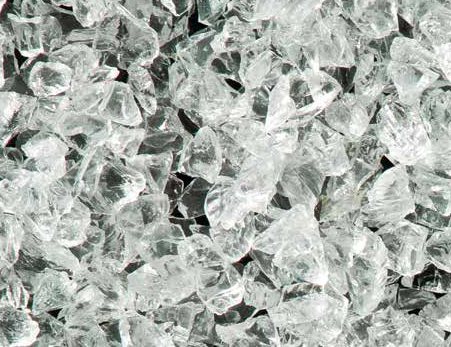
Glass abrasive is often recommended as an alternative to quartz sand, so one of the most common questions is whether glass abrasive is dangerous. The short answer: glass abrasive differs from quartz sand in an important way, but like every abrasive it creates dust and should not be used without the right precautions. In this post we explain where the difference comes from, which risks remain and how to protect yourself.
Why is glass abrasive assessed differently from quartz sand?
Chemically, glass is rich in silicon dioxide, but its structure is amorphous: it has no ordered crystal structure. The risk of quartz sand is associated with respirable free crystalline silica. That is why glass abrasive made from recycled glass is used as an alternative with lower health risk than silica sand.
You can read why crystalline silica is regulated separately on the US Occupational Safety and Health Administration (OSHA) crystalline silica page. For the conditions of use of quartz sand, see our post on quartz sand for blasting.
Which risks still apply?
The crystalline silica difference does not make glass abrasive risk-free. During blasting these risks remain:
- Dust: grains break on impact and create fine dust. Any fine dust strains the airways and reduces visibility.
- Eyes: rebounding grains and sharp particles can injure the eyes.
- Skin: angular glass particles can cause irritation and small cuts.
- Rebound and pressure: a pressurised abrasive stream directed at bare skin can cause injury.
The main hazard often comes from the blasted surface
The dust you breathe in blasting does not come only from the abrasive; material removed from the surface mixes into it too. This is often overlooked:
- When blasting concrete, stone and plaster, the crystalline silica they contain can enter the dust. In that case there is a silica dust risk even if the abrasive is glass.
- Old paints may contain heavy metals. If the composition of the paint you are removing from old buildings or industrial equipment is unknown, assume the worst case.
- Rust, mill scale and coating residues also spread as fine dust.
Safety measures should therefore be planned for the whole job, not just for the abrasive. We describe the order of risk reduction in our post on safety in abrasive blasting and silica dust.
Personal protective equipment
The basic equipment for someone blasting with glass abrasive in the open is:
- A blast helmet with clean breathing air supply
- Heavy blasting gloves and a blasting suit
- Safety footwear and hearing protection
- Suitable respiratory and eye protection for helpers working nearby
A dust mask, face shield or goggles alone do not replace a blast helmet.
Work area and cleaning
- Work in a blast cabinet with dust collection whenever possible.
- When working in the open, screen off the area and keep other people away.
- Do not dry-sweep accumulated dust or blow it around with compressed air; use an industrial vacuum or damp cleaning.
- Take off blasting clothes in the work area; do not enter eating and rest areas in dusty clothing.
Choosing an abrasive with safety in mind
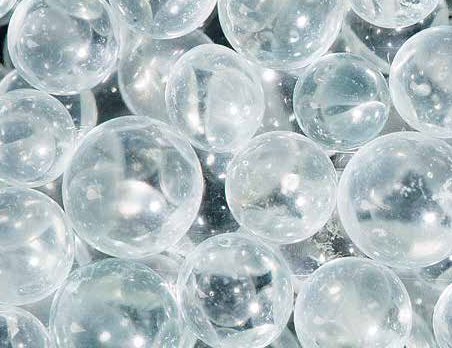
The choice of abrasive directly affects safety, but it is not enough on its own. Choosing an abrasive without free crystalline silica instead of quartz sand reduces the source of the risk, and glass abrasive is one of the options most often considered for this. Abrasives that break down less and can be reused several times in a cabinet, such as glass beads or garnet, can also reduce the amount of dust produced on the same job. Whatever abrasive you choose, dust extraction and protective equipment are still required. Changing the abrasive does not remove the dust coming from the blasted surface.
Read the safety data sheet
Every abrasive has a safety data sheet (SDS). It contains the composition of the material, its hazard classification, recommended protective equipment and first aid information. Ask your supplier for the SDS of the glass abrasive you buy and share it with your workers. For the uses and grain selection of glass abrasive, see glass abrasive blasting, and for how it differs from glass beads, glass beads vs glass abrasive.
Frequently asked questions
Does glass abrasive cause silicosis?
Silicosis is an occupational disease associated with long-term exposure to respirable crystalline silica. Glass is amorphous; however, the blasted surface may contain crystalline silica and any fine dust is harmful. For an assessment of your own situation, consult an occupational physician or a doctor.
Can you blast with glass abrasive without a mask?
No. Glass abrasive also creates dust and rebounding grains can cause injury. A blast helmet with clean air supply, gloves and protective clothing should be used.
Can glass abrasive harm the skin or eyes?
Angular glass particles can cause skin irritation and small cuts, and serious discomfort if they get into the eyes. Wear covering clothing and eye protection; see a doctor if particles get into the eyes or irritation persists.
Contact us for glass abrasive and its safety data sheet
Send us your request for product information, safety data sheets and prices for glass abrasive, glass beads or garnet. Browse all products on the products page or fill in the quote form.