
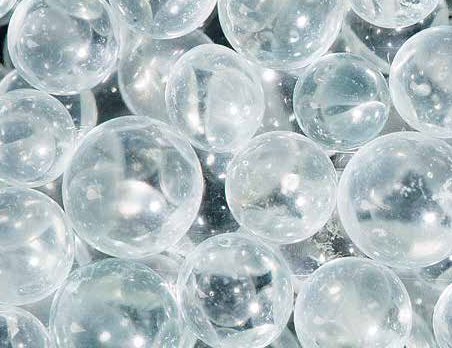
Glass beads are a spherical abrasive that works the surface by impact rather than cutting. This behaviour comes from the shape of the grains, and the shape is gained during production. In this post we explain the steps of how glass beads are made, how crushed glass becomes a sphere and how production quality affects blasting results.
Raw material: soda-lime glass
Glass beads for blasting are usually made from soda-lime glass, the same family as window and bottle glass. The first condition is clean raw material: coloured glass, ceramics, metal caps, labels and organic residue are sorted out. Contamination in the raw material can cause colour variation, bubbly grains and unwanted marks on the surface.
For the general properties of this glass family, the Wikipedia article on soda-lime glass is a good starting point.
Crushing, milling and pre-screening
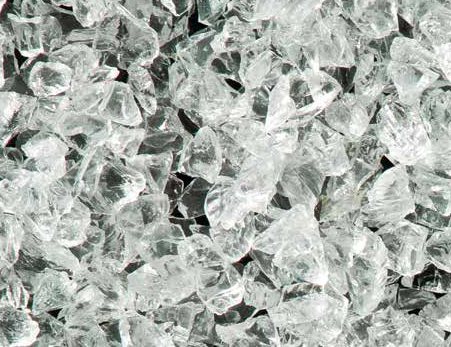
The cleaned glass is first crushed and then milled into fine grains. At this stage the grains are still angular, similar to the glass grit used in blasting. The milled material is pre-screened, because the size of the sphere obtained after spheroidising depends largely on the size of the grain fed in. A narrow feed range means a narrow sphere range.
Flame spheroidising: how does the sphere form?
This is the heart of the process. Angular glass grains pass briefly through a hot flame or furnace. As a grain heats up, its surface softens and becomes fluid. At this point surface tension takes over: the liquid is pulled into the shape with the smallest surface area, the sphere. When the grain leaves the flame it cools quickly and solidifies as a sphere.
Flame temperature, the time a grain spends in the flame and the feed rate all directly affect the result. A grain that is not heated enough stays angular; grains that touch can stick together as twin spheres. The details of the method vary by producer. For general information on glass microspheres, see the Wikipedia article on glass microspheres.
Cooling, screening and classification
The cooled spheres are collected and separated into grain ranges with screens. Our glass beads product page lists typical ranges from 0.04 – 0.07 mm for a very fine finish up to 0.42 – 0.84 mm for stronger cleaning. For the use of fine ranges, see fine glass beads.
Why does roundness control matter?
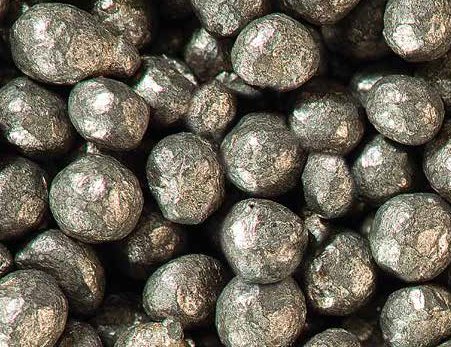
Not every grain leaves the flame as a perfect sphere. Grains that stay angular, form twins or contain bubbles are unwanted in the final product, so the roundness ratio is checked in production and non-spherical grains are removed. Roundness determines these results in blasting:
- Surface appearance: angular grains leave scratches and uneven matting, spoiling the even satin look.
- Service life: a true sphere spreads the impact evenly and breaks later; broken and angular grains turn to dust faster.
- Dust: a product prone to breaking creates more dust and visibility problems in the cabinet.
The roundness value is stated on the product data sheet; we recommend asking for it when you request a quote.
What does production quality change in blasting?
Well-made glass beads give a consistent satin look while preserving part dimensions, cause no iron contamination and can be reused several times under suitable conditions. For applications and settings, see surface finishing with glass beads; for recycling, see abrasive recycling.
What to look for on the data sheet
Knowing how glass beads are made helps you ask for the right information when requesting a quote. We recommend checking these points on the data sheet:
- Material: the glass type and confirmation that it is lead-free.
- Grain range: a clearly stated range that suits your job.
- Roundness ratio: how large the share of non-spherical grains is.
- Hardness and density: consistency with the typical values on our product page.
- Packaging: sealed bags or big bags that protect against moisture.
Glass beads clump when they absorb moisture and flow unevenly in the cabinet. Bags should therefore be stored in a dry, closed area, and opened bags should be resealed. When switching to a new product, a trial with a small sample is the easiest way to see any difference in appearance in advance.
Frequently asked questions
Are glass beads made from recycled glass?
Clean soda-lime glass is used as the raw material, and this can be sorted recycled glass. What matters is that the raw material is free of colour, metal and organic contamination.
Are glass beads and glass grit made from the same raw material?
They can start from similar glass, but the process differs. Glass grit is crushed, screened and stays angular; glass beads are formed into spheres in a flame. That is why one works by cutting and the other by impact. Details in glass beads vs glass grit.
Why do glass beads break during use?
With each impact some grains fatigue and break. High pressure, hard surfaces and low roundness speed this up. Broken grains are removed by the separator and the lost amount is topped up with new product.
Get a quote for glass beads
We share the data sheet of the glass beads we supply and help you choose the right grain range for your job. Browse all products on the products page or fill in the quote form for pricing.