
The aluminium oxide used in blasting is not a sand dug out of the ground as it is; it is a synthetic abrasive that is fused in an electric furnace, solidified, then crushed and sieved. Knowing how it is made helps explain why white and brown grades behave differently and what grain quality depends on. In this post we explain how aluminium oxide is made, step by step from raw material to the bag.
Raw material: bauxite and alumina
The main source of aluminium oxide is bauxite, a rock rich in aluminium hydroxide minerals. Bauxite can take two different routes:
- Direct fusion: calcined bauxite is fed to the furnace together with a carbon source and additives such as iron turnings. This route gives brown aluminium oxide.
- Purification first: bauxite is processed by the Bayer process into a pure white powder called calcined alumina. This powder is the raw material for white aluminium oxide.
The Bayer process dissolves bauxite in caustic soda, separates the impurities and converts the aluminium hydroxide into alumina by calcination. For an overview, see the Wikipedia article on the Bayer process. Calcined alumina on its own is not a blasting abrasive; its grains are very fine and soft, and it is fusion that produces the hard grain suitable for blasting.
Fusion in the electric arc furnace
The real transformation happens in the electric arc furnace. The arc between graphite electrodes melts the raw material completely. As the molten mass cools, large, dense corundum crystals form. This is why the aluminium oxide used in blasting is also called fused alumina or electrocorundum in the trade.
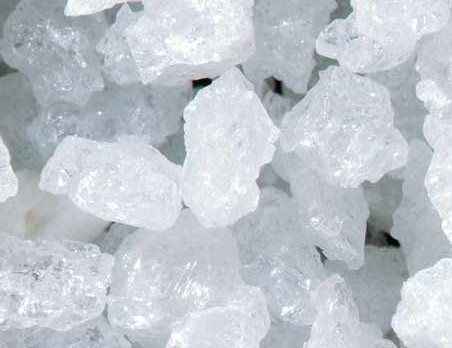
- White aluminium oxide: pure calcined alumina is fused. The product is high-purity and iron-free; our product page gives its chemical composition as more than 99% Al₂O₃.
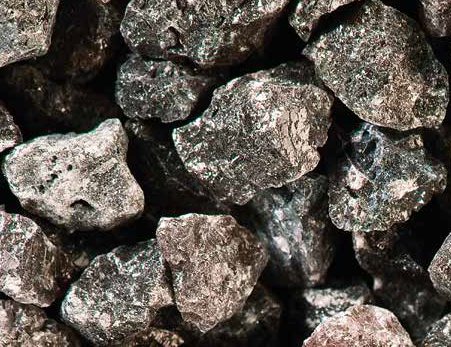
- Brown aluminium oxide: bauxite is fused together with carbon. The carbon reduces part of the impurities in the bauxite, such as iron and silica, which sink to the bottom of the furnace and are separated. Remaining components such as titanium oxide give the grain a tougher structure and its brown colour.
As our product pages state, brown aluminium oxide is made by fusing bauxite and anthracite at high temperature. We explain the difference in use between the two in white vs brown aluminium oxide.
Cooling and crushing the blocks
The molten mass from the furnace is cooled in a controlled way. The cooling rate affects crystal size and grain toughness, so producers tune this step to their own process. The large solidified blocks are first broken in primary crushers and then reduced step by step in jaw, roll or impact crushers.
The crushing method determines grain shape. Blasting needs angular grains with sharp edges; our product pages also describe the grain shape as "angular and irregular". This angular structure lets the abrasive cut the surface and create a profile.
Magnetic separation and cleaning
Iron particles from the crushing equipment and, in the brown grade, metallic residues from fusion are removed from the grains with magnetic separators. This step is especially important for white aluminium oxide used on surfaces sensitive to iron contamination, such as stainless steel and aluminium. Where needed, the grain is washed or de-dusted; this step must be done well for low dust and a clean surface in blasting.
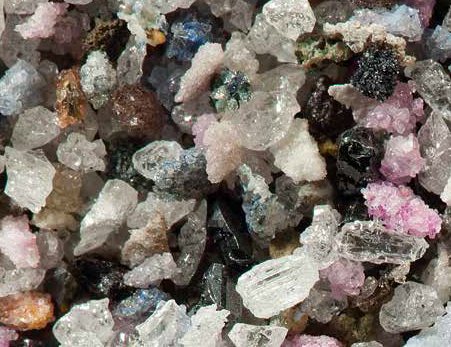
Sieving and FEPA grit numbers
The last step is separating the grains by size. The crushed material passes through sieve sets and is classified into FEPA macrogrit numbers such as F24, F60 and F120. For example, our product pages give 600–850 µm for F24, 212–300 µm for F60 and 90–125 µm for F120. Very fine microgrits are separated not by sieving but by other classification methods.
We explain how grit numbers are read in aluminium oxide F80 and the use of fine grains in aluminium oxide powder.
How production quality affects blasting
- Purity: iron and other impurities can cause staining and contamination on sensitive metals.
- Grain shape: angular grains cut fast; very flat or needle-like grains break more easily.
- Dust content: poorly sieved product contains more dust; visibility drops and abrasive consumption rises.
- Size distribution: a narrow size range gives a more even profile on the surface.
You can read how hardness affects blasting in aluminium oxide hardness and which industries use it in aluminium oxide uses.
Frequently asked questions
Is aluminium oxide natural or synthetic?
The aluminium oxide used in blasting is synthetic. Its raw material is natural bauxite, but the grain is made by fusing and solidifying it in an electric arc furnace and then crushing and sieving it.
Why is white and brown aluminium oxide made differently?
White aluminium oxide is made from calcined alumina purified by the Bayer process; brown is made by fusing bauxite directly with carbon. This changes purity, colour and grain toughness.
How is the grain size of aluminium oxide determined?
The crushed material passes through sieve sets and is classified into FEPA grit numbers. The micron range of each number is given in the producer data sheet and on our product pages.
Get a quote for aluminium oxide
Tell us your application, the surface and the profile you need, and we will choose the right aluminium oxide grade and grit number together. Browse all products on the products page or fill in the quote form for pricing.