
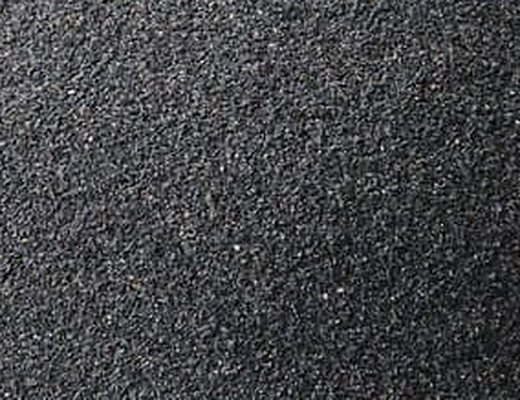
Basalt sand is a metal-free natural abrasive used for general-purpose blasting. With its dark colour and angular grains, it stands out as an economical option that can be used instead of sand. In this post we answer what basalt sand is, what properties it has, where it is used in blasting and where another abrasive should be preferred.
What is basalt sand?
Basalt is a dark rock formed when volcanic lava cools at the Earth’s surface, and it is one of the most common volcanic rocks in the crust. Basalt sand is an abrasive obtained from this rock and supplied in set grain ranges. For general information on how the rock forms, see the Wikipedia article on basalt.
Our basalt sand, with its balanced cutting power and economical nature, is used for general surface cleaning and maintenance work.
Technical properties of basalt sand
The typical values on our product page are:
- Material: natural basalt (volcanic rock)
- Hardness: approx. 6 – 6.5 on the Mohs scale
- Density: approx. 2.8 – 3.0 g/cm³ (basalt rock)
- Composition: natural silicate minerals; SiO₂ in the rock approx. 45 – 52%
- Grain range: 0.5 – 3.0 mm
- Grain shape: angular to sub-angular
- Colour: dark grey to black
These are typical values from publicly available sources; contact our sales team for the product data sheet and current grain options.
Where is it used in blasting?
- Cleaning steel and metal surfaces
- Removing light rust and dirt
- General maintenance and renovation work
- Industrial surface preparation
- Pressure blasting systems
Its angular and sub-angular grains cut into the surface, so it gives good results in maintenance work where rust and dirt are removed, rather than for simple cleaning. The coarse end of the grain range suits heavy cleaning, the fine end lighter jobs. We explain the general logic of grain selection in our grain size selection guide.
Advantages and limits
- Natural and economical: a cost-effective option for general-purpose work that does not need high hardness.
- Metal-free: no iron residue problem as with metallic abrasives.
- Balanced cutting power: angular grains remove rust and dirt effectively.
- Chemically stable.
- Limit: it is softer than aluminium oxide and garnet; on very hard coatings and jobs that need fast cutting, those abrasives can be more efficient.
- Limit: its grain range is mainly medium to coarse, so it is not the first choice for very fine surface work.
Basalt sand, garnet or aluminium oxide?
The choice depends on the condition of the surface and the result required:
- General maintenance, light rust and dirt: basalt sand is an economical and adequate choice.
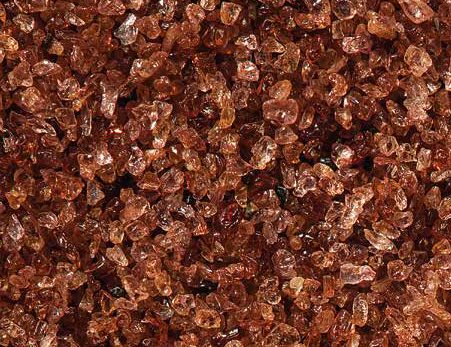
- An even surface with low dust before coating: garnet may be more suitable. Details in what is garnet abrasive.
- Hard layers, fast cutting and recycling: consider brown fused alumina or mixed alumina.
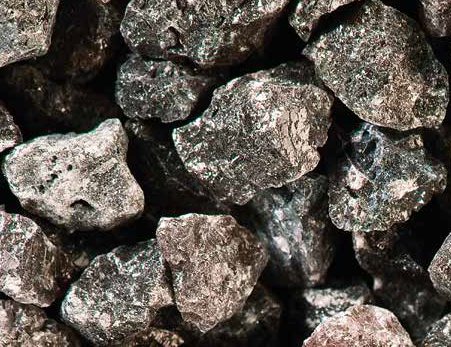
We compare all options in types of blasting abrasives. Cost should be judged not only by price per kilo but by consumption per square metre; see blasting abrasive prices.
What to watch when working with basalt sand
Getting good results with basalt sand depends on application as much as on the abrasive:
- Keep the sand dry and clean; damp abrasive clumps in the pot and disrupts flow.
- Match nozzle size and pressure to the grain size; coarser grains need a larger nozzle.
- Test on a small area before starting and check cleanliness and profile.
- If the surface will be coated, check the cleanliness grade against the specification; see Sa 2, Sa 2½ and Sa 3.
- After blasting, remove the dust and move on to primer or paint without long delays.
Safety
Basalt is also a silicate-bearing rock; the dust produced during blasting must not be inhaled. Use proper dust control and respiratory protection and check the safety data sheet (SDS). This is general information; consult your occupational safety specialist about exposure and protection. For general precautions, see blasting safety.
Frequently asked questions
What is basalt sand used for?
It is used with pressure blasting systems for cleaning steel and metal surfaces, removing light rust and dirt, general maintenance and renovation, and industrial surface preparation.
Is basalt sand better than garnet?
It depends on the purpose. Basalt sand is an economical choice for general-purpose work; garnet is harder and denser and stands out in pre-coating work that needs low dust and an even surface.
What grain size is basalt sand?
The typical grain range of our product is 0.5 – 3.0 mm. Contact our sales team for the right size for your job and current options.
Get a quote for basalt sand
Tell us about the surface you will blast, your system and the quantity you need, and we will choose the right grain range together. Browse all products on the products page or fill in the quote form for pricing.