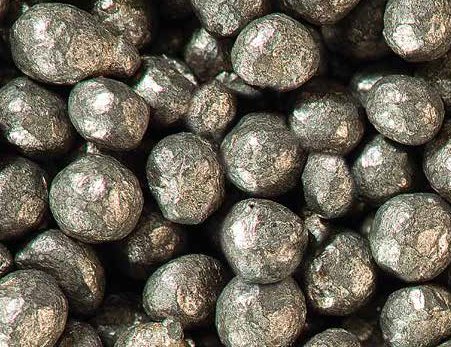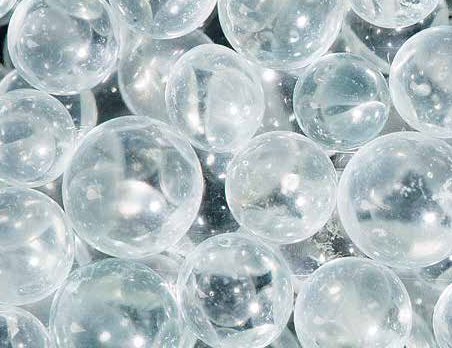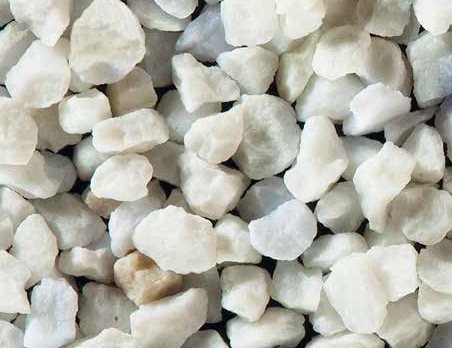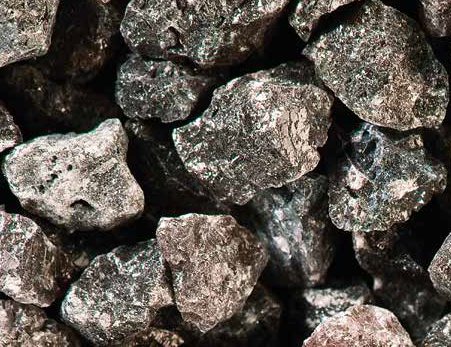

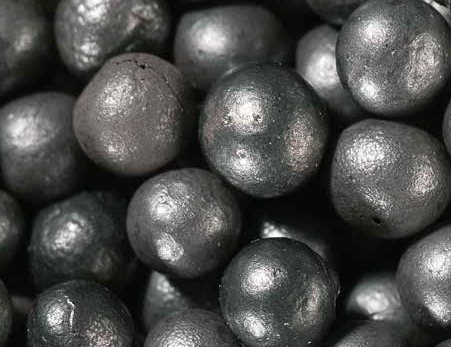
The performance of steel shot in blasting depends on its shape, hardness, internal structure and the consistency of its grain size. All of these are set during production. We summarised production briefly in what is steel shot; in this post we explain how steel shot is made step by step, and how steel grit and cut wire differ from this process.
Raw material and melting
Steel shot production usually starts by melting selected scrap steel in electric furnaces. The chemical composition of the melt is analysed, and elements such as carbon, manganese and silicon are brought into the target range. Composition directly affects the hardness reached after heat treatment and the toughness of the grain. That is why consistent composition from batch to batch is a basic requirement for predictable consumption and surface results in the blast machine.
Atomisation: from droplet to sphere
Molten steel is poured as a thin stream, and this stream is broken up by a powerful water jet. This process is called atomisation. As the droplets cool in air and water, surface tension pulls them into spheres and they solidify in that shape. Atomisation produces grains of different sizes; some are not true spheres and some may contain internal voids. That is why sorting and classification are essential in the following stages.
Drying, pre-screening and shape sorting
The grains taken from the water are dried and passed through a coarse screen. Shape sorting follows: round grains are separated from long, flat or irregular ones, for example by using their different rolling behaviour on inclined surfaces. Non-spherical grains do not go into the final product; some may be directed to steel grit production. Good shape sorting is important for the shot to leave an even impact pattern on the surface.
Heat treatment: hardening and tempering
The grains from atomisation are brought to the required hardness and toughness by heat treatment. First comes hardening: the grains are heated and cooled rapidly to gain a hard structure. On its own, however, this structure is brittle. That is why tempering follows: the grains are reheated to a lower temperature to reduce brittleness and gain toughness. The balance between hardness and toughness lets the shot clean effectively and last a long time.
For the general principle of tempering, see the Wikipedia article on tempering. We explain how hardness and grain shape affect blasting results in steel shot vs steel grit.
Final screening and quality control
After heat treatment the shot is screened one last time and separated into sizes. Quality control usually covers:
- Chemical composition: whether it is within the target range.
- Hardness: the consistency of grain hardness and its distribution.
- Microstructure: the internal structure that shows heat treatment was done correctly.
- Grain size distribution: the size range measured by sieve analysis.
- Shape and internal defects: the share of non-spherical, cracked or hollow grains.
This information is given on the product data sheet. We share the data sheets of the products we supply on request.
How is steel grit made?
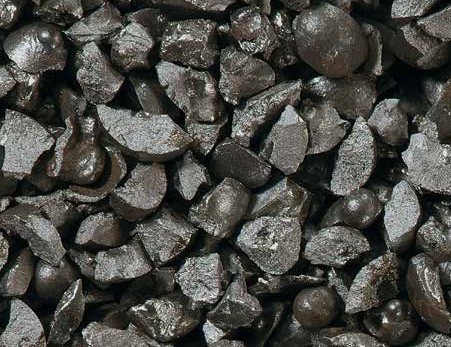
Steel grit is not made in a separate casting process but from steel shot. Hardened shot is crushed into angular grains. The crushed grains are tempered to different degrees according to the required hardness class, so grit classes of different hardness are obtained from the same starting material. Finally the grains are screened into sizes. For hardness classes and applications, see what is steel grit.
How cut wire differs
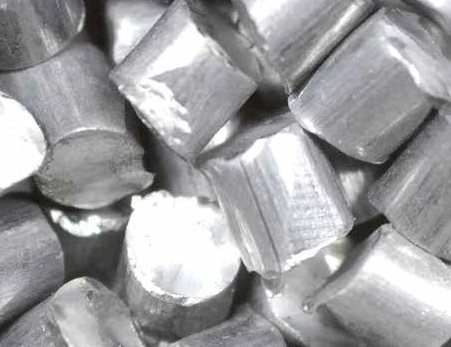
Cut wire is not cast. Drawn steel wire is cut into lengths close to the wire diameter. As a result it contains no internal voids and has a homogeneous structure. In the conditioned type, the sharp edges of the cut pieces are rounded to give a near-spherical shape. Details are in what is cut wire shot.
What does production quality change in the machine?
In a wheel blast machine, shot strikes thousands of times, breaks down and passes through the separator. A product with consistent composition, correct heat treatment and good shape sorting is consumed more slowly, creates less dust and gives a more even surface. Defective grains break early, which can increase both abrasive consumption and wear on machine parts such as the blades. That is why it is worth comparing service life in the machine, not just the unit price. For ways to cut consumption, see abrasive recycling.
Frequently asked questions
Is steel shot made from scrap steel?
Selected scrap steel is usually melted and used. What matters more than the source is bringing the melt composition into the target range and carrying out the heat treatment correctly.
Is stainless steel shot made the same way?
The logic of breaking molten metal into droplets can also be used for stainless shot, but alloy and process details vary by producer. There are also products made by cutting stainless wire. For details, see our stainless steel shot page.
Why do some shot grains break early in use?
Internal voids, cracks, irregular shape or improper heat treatment can make a grain break early. Broken grains are removed by the separator; early breakage raises consumption and dust. That is why the quality information on the data sheet matters.
Get a quote for steel shot
Tell us your machine type and the parts you process, and we will choose the right shot, grit or cut wire together. Browse all products on the products page or fill in the quote form for pricing.