
Shot-blasted granite slabs, shot-blasted concrete pavers and textured concrete blocks give outdoor areas a non-slip, natural-looking surface. This surface is usually produced in factories on wheel blast machines using metal abrasives. The most common problem in shot blasting granite and concrete is that iron particles left by the abrasive rust over time and leave brown stains on the surface. In this post we explain the cause of this problem, how stainless cut wire shot prevents it and how to choose the right grain size.
Why are granite and concrete surfaces shot blasted?
Blasting breaks the top layer of stone and concrete in a controlled way and creates a rough, matt texture. The main purposes of this texture are:
- Slip resistance: On footpaths, stairs, pool surrounds and plaza paving, a rough surface reduces slipping.
- Appearance: Granite gets a natural, matt and even surface; in concrete the aggregates are slightly exposed.
- Cleaning: Release agent, cement laitance and surface dirt are removed from concrete.
- Preparation before coating: On concrete floors the surface is opened up so that epoxy or similar coatings can bond.
For general information on granite, see the granite article. Wall blasting for restoration is a different job; we cover it separately in our stone wall blasting post.
Why does carbon steel abrasive leave rust stains?
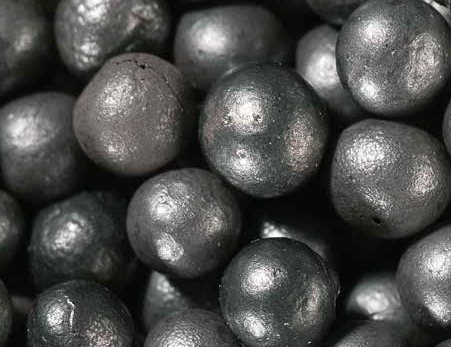
Carbon steel shot and grit, widely used in wheel blast machines, give good results on metal surfaces. On the porous surface of stone and concrete, however, fine iron particles and dust broken off the worn abrasive can remain. When these particles come into contact with moisture, rain or washing water, they oxidise and form brown, spot-like stains on the surface.
- Stains are more visible on light-coloured granite and white cement concrete.
- Stains usually appear weeks after production, once the product has been laid on site.
- Iron particles lodged in the pores are hard to clean off afterwards.
For this reason, using a non-rusting abrasive at the blasting stage prevents the problem at its source in stone and concrete products where appearance matters.
What is stainless cut wire shot?
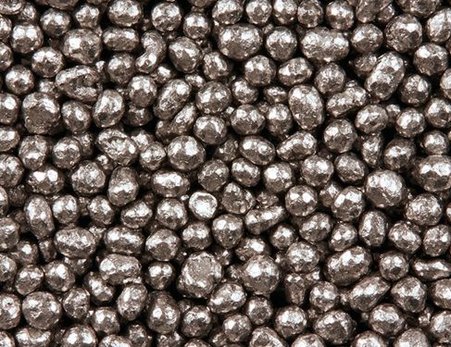
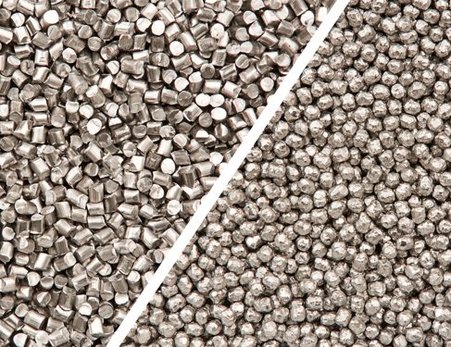
Cut wire shot is a cylindrical abrasive produced by cutting steel wire into lengths close to the wire diameter. Its edges become rounded with use. Stainless cut wire shot is made from chromium or chromium-nickel stainless steel wire, so the particles left on stone and concrete surfaces do not tend to rust. We describe the general structure of cut wire shot in our what is cut wire shot post.
| Property | Stainless cut wire shot Cr | Stainless cut wire shot CrNi |
|---|---|---|
| Chromium (Cr) | 11.50 – 18.0% | 11.50 – 20.0% |
| Nickel (Ni) | max. 0.6% | max. 10.0% |
| Hardness | approx. 300 HV ±10% | approx. 400 – 670 HV (depending on grain shape and diameter) |
| Specific gravity | approx. 6.5 – 7.8 g/cm³ | approx. 6.5 – 7.8 g/cm³ |
| Diameter options | 0.4 – 1.6 mm | 0.3 – 1.6 mm |
| Standard | — | DIN 8201-4; SAE AMS 2431/4; SAE J441 |
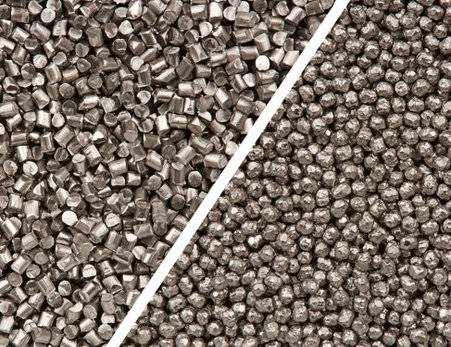
Cr or CrNi? Which stainless cut wire shot should you choose?
Both products are used for stone and concrete surface treatment, but they meet different needs:
- Stainless cut wire shot Cr: It has a low nickel content and a hardness of around 300 HV. It is a product that generates less dust during blasting. In the production of concrete blocks and concrete pavers it is considered as an alternative to high-nickel materials.
- Stainless cut wire shot CrNi: Thanks to its chromium-nickel content it offers higher corrosion resistance and is known for its long service life. It is used in granite stone processing and in shot peening.
The choice should take into account the colour of the surface, the required texture depth, the wheel power of the machine and abrasive consumption together. When switching to a new product, the soundest approach is to run a trial on the existing machine first.
How do you choose the grain size?
For cut wire shot, grain size is expressed as the wire diameter. The general trend is as follows:
- Fine grains (0.3 – 0.6 mm): Give a finer, more uniform texture and open the surface less deeply.
- Medium grains (0.6 – 1.0 mm): Provide a balanced texture and work rate for granite slabs and concrete pavers.
- Coarse grains (1.2 – 1.6 mm): Create a deeper, more pronounced texture and speed up work on hard stone.
These ranges are only a general guide. The right diameter should be determined by trial blasting according to the hardness of the stone and the machine speed. Keeping the operating mix in the machine balanced between newly added and worn grains also keeps the surface consistent from batch to batch.
When are stainless steel grit and carbon steel used?
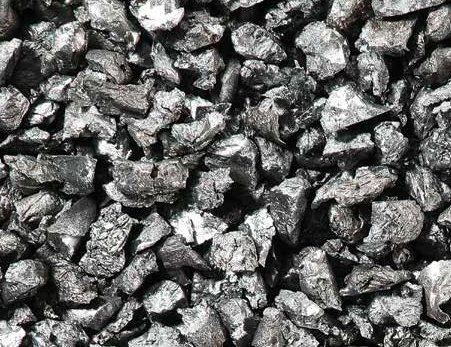
If a more aggressive, angular texture is required, stainless steel grit can also be considered; its stainless structure likewise reduces the risk of staining. Details are in our stainless grit post.
It cannot be said that carbon steel abrasives cause problems in every stone and concrete job. For example, on concrete floors that will be covered with a coating such as epoxy, carbon steel shot or grit can be used because the appearance of the surface will be covered later. For products whose surface will remain bare and where appearance matters, stainless abrasive is preferred. For the difference between steel shot and steel grit, see our steel shot vs steel grit post.
Points to watch in practice
- Do not mix abrasives: If carbon steel has been used in the machine before, empty the system thoroughly before switching to stainless wire. Even a small amount of carbon steel residue can cause stains.
- Dust collection: Stone and concrete dust fills the filter system quickly. Maintain the filters regularly and use suitable respiratory protection against the dust generated during blasting.
- Separator setting: If stone dust and broken fragments are not separated well from the abrasive, texture uniformity suffers.
- Test panel: For a new stone type or colour, blast a test panel first and keep it in a damp environment for a while to check whether stains appear.
Frequently asked questions
Why do rust stains appear on shot-blasted granite?
The most common cause of staining is fine iron particles broken off carbon steel abrasive remaining in the pores of the stone and oxidising with moisture. Using a stainless abrasive at the blasting stage and clearing the machine of carbon steel residue significantly reduces this risk.
Which abrasive is used for blasting concrete pavers?
In industrial production, metal abrasives are generally used in wheel blast machines. For light-coloured products where appearance matters, stainless cut wire shot is preferred because of the risk of rust stains. On floors that will be coated, carbon steel shot or grit can also be used.
Can stainless cut wire shot be reused?
Yes. Stainless cut wire shot is a reusable blasting medium. In a wheel blast machine it passes through the separator and is returned to the circuit; worn, smaller grains and dust are separated out, and the lost quantity is topped up with new material.
Request a quote for stainless cut wire shot
If you are looking for stainless cut wire shot for your granite, natural stone or concrete products, send us the stone or concrete type, the texture you want and the machine you use. Let us determine the suitable product and wire diameter together. You can browse all abrasives on our products page and fill in the quote form for prices. We ship by cargo throughout Turkey and for export.