
When people say stainless steel shot, they usually think of a single product, yet the stainless metallic abrasives used in blasting fall into several types: CrNi stainless shot, cast Cr shot, stainless cut wire and stainless grit. In this article we compare these stainless steel abrasives by hardness, microstructure, size and application, and explain which one to consider for which job.
Why use stainless steel blast abrasives?
Carbon steel shot is effective in heavy cleaning, but it can leave fine iron particles on the surface it strikes. When these particles oxidise in humid conditions, rust stains and discolouration appear. Stainless metallic abrasives are chosen to reduce this risk of iron contamination while keeping the weight and reusability of metallic shot. The main areas of use are:
- Stainless steel parts: jobs where ferritic residue, rust film and discolouration on the surface are unwanted.
- Aluminium and other non-ferrous castings: foundry sand removal, deburring and surface finishing.
- Zamak, brass and galvanised parts: surface cleaning and sweep blasting where appearance matters.
- Granite, natural stone and concrete: decorative surface treatment where rust stains must not appear later.
We cover the general process and abrasive selection for stainless surfaces in our article on stainless steel blasting. For general information on the material itself, see the stainless steel article.
CrNi stainless steel shot (austenitic)
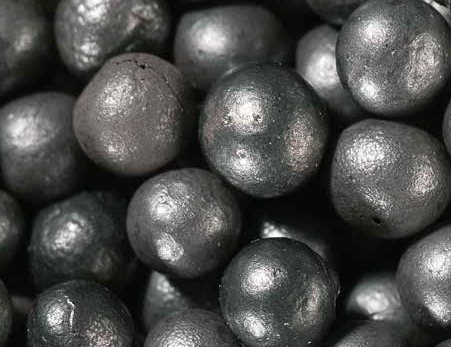
Stainless steel shot CrNi is a chromium-nickel abrasive produced by a melting process and formed into spherical grains. Its austenitic microstructure explains why it hardens in use and has a long service life. The main values in our product data are:
- Hardness: ±20 HRC (235 HV) as new, ±45 HRC (460 HV) in operation
- Chemical analysis: Cr 16.00 – 20.00% · Ni 7.00 – 9.00%
- Density: approx. 7.9 g/cm³; grain shape spherical
- Size range: from ALPHA 010 (0.0 – 0.2 mm) to ALPHA 200 (1.7 – 3.4 mm)
It is used for sand removal, descaling, and micro and structural blasting. Because the new grain is relatively soft, it works the surface without cutting and leaves a peening effect.
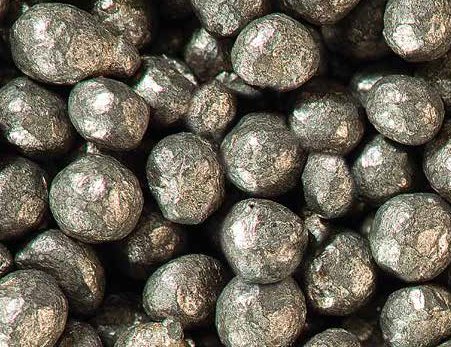
Cast stainless Cr shot (martensitic)
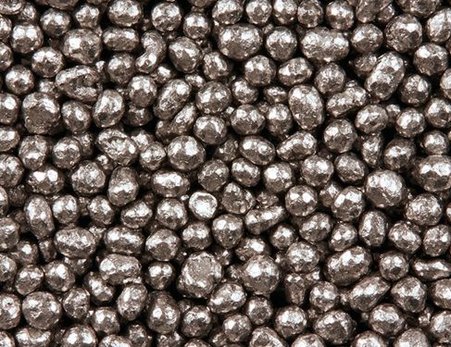
Cast stainless steel Cr shot is a chromium-based abrasive (Cr 12.00 – 20.00%) with a low nickel content (Ni max. 0.95%). In the product data the grain shape is given as irregular and the microstructure is martensitic. The new grain comes at ±40 HRC (390 HV) and reaches ±50 HRC (530 HV) in the operating mix, which allows faster work.
It is considered a cost-attractive alternative to CrNi shot for aluminium castings and other non-ferrous materials. It is used for deburring, descaling, foundry sand removal, structural blasting, surface finishing and sweep blasting of galvanised parts. The size range runs from BETA 010 (0.0 – 0.2 mm) to BETA 300 (1.7 – 3.2 mm). We explain the points to watch on aluminium parts in our article on aluminium blasting.
Stainless cut wire: CrNi and Cr
Cut wire is made by cutting stainless steel wire into pieces of roughly the same length as its diameter; the grain shape is cylindrical/rounded and the size is defined by the wire diameter. For details, see our article what is cut wire. The two stainless cut wires we supply are:
- Stainless Steel Cut Wire CrNi: hardness depends on grain shape and diameter (approx. 400 – 670 HV). DIN 8201-4, SAE AMS 2431/4 and SAE J441 specifications are given. Wire diameters 0.3 – 1.6 mm. Used in shot peening and granite stone processing.
- Stainless Steel Cut Wire Cr: lower hardness at approx. 300 HV ±10%, notable for reduced dust generation during blasting. Used as an alternative to high-nickel abrasives and preferred in the concrete block industry. Wire diameters 0.4 – 1.6 mm.
You can read about its use on stone and concrete in our article on granite and concrete blasting, and about peening in what is shot peening.
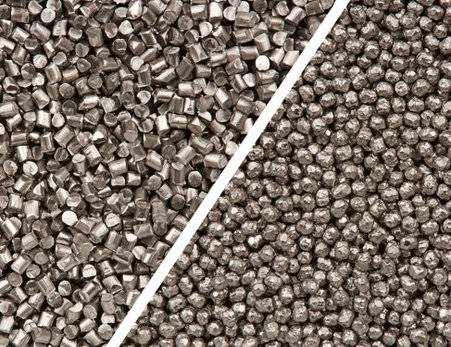
Stainless shot or stainless grit?
Shot and cut wire clean the surface with round or rounded grains through a peening effect. Stainless steel grit, by contrast, is angular and, at ±59 HRC (710 HV), roughens the surface by cutting it. If a surface profile is needed before coating, painting or metallising, grit is the choice; for cleaning, surface finishing or structural blasting, shot or cut wire is considered. You will find more on grit in our article on stainless steel grit, and the general logic of the shape difference in steel shot vs steel grit.
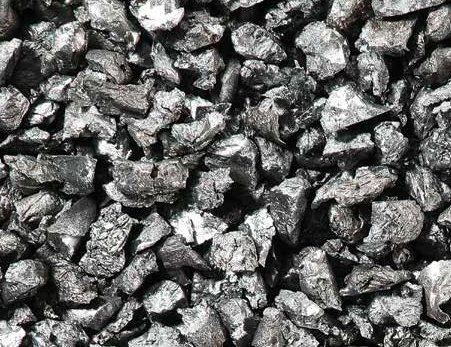
Stainless steel shot and other stainless abrasives: comparison
| Product | Grain shape | Hardness | Structure / content | Main use |
|---|---|---|---|---|
| CrNi stainless shot | Spherical | ±20 HRC new, ±45 HRC in operation | Austenitic, Ni 7 – 9% | Sand removal, descaling, micro and structural blasting |
| Cast Cr shot | Irregular | ±40 HRC new, ±50 HRC in operating mix | Martensitic, Ni max. 0.95% | Aluminium and non-ferrous castings, deburring, sweep blasting |
| Cut wire CrNi | Cylindrical/rounded | Approx. 400 – 670 HV | Ni max. 10% | Shot peening, granite, casting cleaning |
| Cut wire Cr | Cylindrical/rounded | Approx. 300 HV | Ni max. 0.6% | Concrete and natural stone, reduced dust |
| Stainless grit | Angular | ±59 HRC | Cr 27 – 30% | Roughening, surface preparation before coating |
The values in the table are taken from our product data. Which product works more efficiently in a given job depends on the part material, the required surface and the machine, so test blasting is recommended.
Choosing by grain size and blasting system
All of these stainless abrasives can be used in pressure blasting systems and wheel (turbine) blasting machines. When choosing, consider the following:
- Grain size: fine grains give a smoother, finer surface; coarse grains give a stronger effect.
- Recovery: metallic abrasives are reusable; broken fines and dust should be removed regularly.
- Mixing: clean the system before using it in a machine that has run carbon steel abrasive; otherwise iron contamination continues.
- Dust and respiratory protection: every blasting job produces dust; use suitable respiratory protection and a dust collection system.
We describe the recovery set-up in our article on blasting abrasive recycling. If you are looking for a pressure system, see our pressure blasting machines page.
Frequently asked questions
Is stainless steel shot magnetic?
It depends on the microstructure. Austenitic stainless steels are generally weakly magnetic, while martensitic stainless steels are attracted to a magnet. A magnet test can therefore give an idea when telling CrNi shot from cast Cr shot, but it does not replace a chemical analysis.
Can stainless steel shot be reused?
Yes. In our product data, CrNi shot, cast Cr shot, both cut wires and stainless grit are listed as reusable abrasives. In a recovery system they are recirculated while broken fines and dust are separated.
Should I choose CrNi shot or cast Cr shot?
If ferritic residue and discolouration on the surface are to be avoided, CrNi shot stands out. If higher operating hardness and a cost advantage are sought for aluminium and non-ferrous castings, cast Cr shot is considered. A final decision should be made by testing with the part and machine details.
Request a quote for stainless steel shot
Send us your part material, the required surface and the blasting system you use, and we will determine the right stainless abrasive and grain size together. Product values are on the stainless steel shot page. You can browse all abrasives on our products page and fill in the quote form for pricing. We supply the products in 25 kg bags and in big bags of up to 1 tonne, and ship by courier throughout Türkiye and for export.