
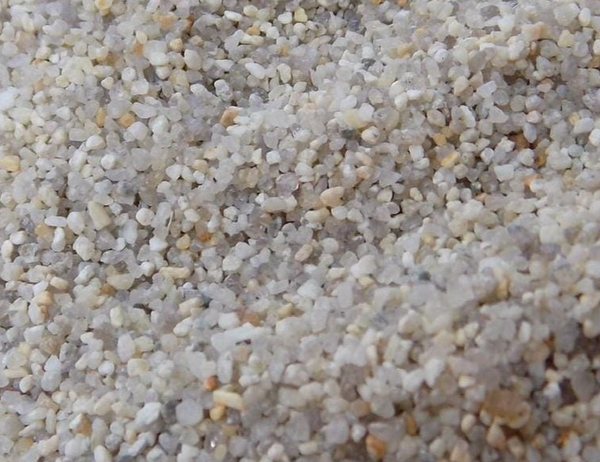
When people hear "blasting sand", many picture sand taken from a river or a beach. In fact, most abrasives used today are industrial products brought to a set grain size, moisture level and cleanliness. In this post we explain how blasting abrasives are made, family by family, and summarise the quality criteria you should check as a buyer.
Four main families, four production logics
Blasting abrasives fall into four groups by source, and each group is made differently:
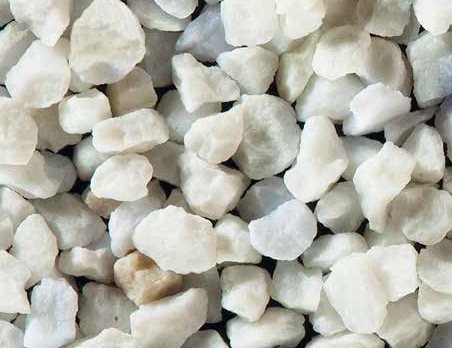
- Natural minerals: naturally occurring grains such as garnet, quartz and basalt are extracted, cleaned and classified.
- Synthetic minerals: aluminium oxide and silicon carbide are produced in high-temperature furnaces, then crushed and screened.
- Recycled abrasives: products such as glass grit are made by cleaning and crushing waste material.
- Metallic and plastic abrasives: steel shot, steel grit, cut wire and plastic media are made through metal or polymer processing.
For how these types differ in blasting, see types of blasting abrasives. As a general source on abrasives, the Wikipedia article on abrasives is also useful.
Natural minerals: garnet, quartz and basalt
With natural abrasives, the goal is to turn material from the deposit into a clean, consistent product suitable for blasting. The steps vary by product, but the general flow is:
- Extraction: ore is taken from a rock deposit or sand deposit.
- Washing: clay, dust and salts are removed with water.
- Drying: moisture is removed because it disrupts flow and causes blockages in the pot.
- Crushing (if needed): large pieces are crushed into angular grains.
- Separation and screening: foreign minerals are removed with magnetic or density-based separators, and screens create the grain ranges.
For product details, see what is garnet abrasive, quartz blasting sand and what is basalt sand.
Synthetic minerals: aluminium oxide and silicon carbide
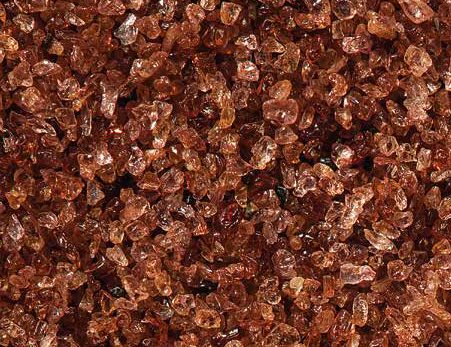
Synthetic abrasives are not found ready-made in nature; raw materials are converted into a new structure at high temperature. Aluminium oxide is obtained by melting alumina-bearing raw materials in an electric arc furnace. The cooled block is crushed, milled and screened. The purity of the raw material sets the difference between the white and brown grades. Silicon carbide forms when a silica source and a carbon source are heated together to a high temperature in a furnace; it is then crushed and screened as well.
Crushing makes the grains angular and sharp, which is the source of the cutting power of synthetic minerals. For the differences between grades, see white vs brown aluminium oxide and what is silicon carbide.
Recycled abrasive: glass grit
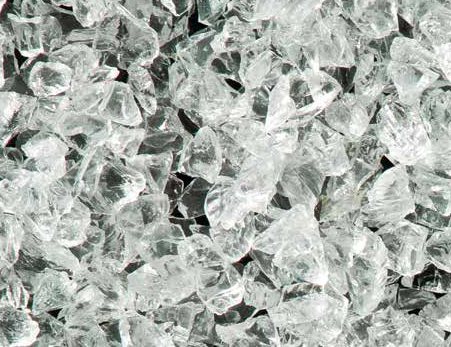
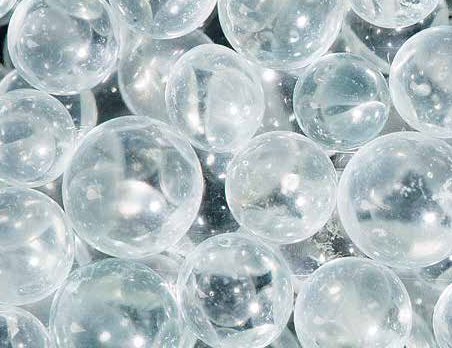
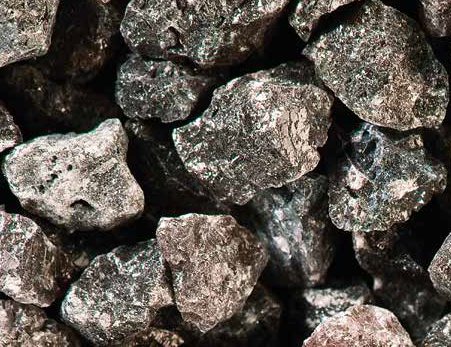
Glass grit is made by cleaning waste glass of labels, metal and organic residue, then drying, crushing and screening it. Crushing leaves the grains angular, so glass grit works by cutting. Glass beads, made from the same raw material, are shaped into spheres in a flame and work by impact; we explain the difference in glass beads vs glass grit.
Metallic and plastic abrasives
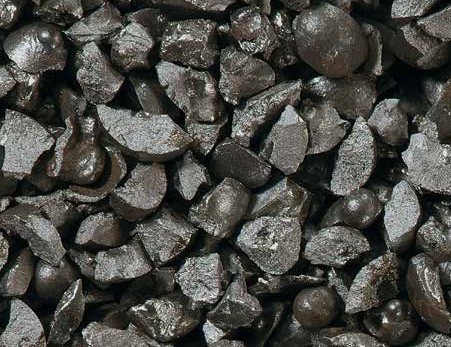
- Steel shot: molten steel is broken into droplets that solidify as spheres, followed by heat treatment and screening. Details in what is steel shot.
- Steel grit: angular grains are made by crushing hardened shot. See what is steel grit.
- Cut wire: drawn steel wire is cut into short pieces; in the conditioned type the edges are rounded. See what is cut wire shot.
- Plastic media: polymer material is crushed into angular grains and screened. See plastic media blasting.
Quality control: what is checked in production?
Whatever the abrasive type, some common criteria determine whether a product gives good blasting results:
- Grain size distribution: measured by sieve analysis; a narrow, consistent range means predictable surface results.
- Moisture: a dry product flows smoothly through the pot and hose.
- Dust and fines: less dust gives better visibility and a cleaner working area.
- Soluble salts and chlorides: if carried to the surface, they can cause corrosion under the paint.
- Composition: free crystalline silica and iron content matter depending on the application.
We explain how these criteria affect blasting results in blasting abrasive properties.
What should you look for as a buyer?
Knowing how an abrasive is made helps you ask the right questions. Ask for the product data sheet and the safety data sheet; check that the grain range suits your job; and ask about batch-to-batch consistency and moisture-proof packaging. When switching to a new product, a trial with a small sample is the safest route. For the selection steps, see our guide how to choose a blasting abrasive.
Frequently asked questions
Can blasting abrasive be made from river or sea sand?
River and sea sand can contain uncontrolled moisture, salt and fine dust, and the grains are usually rounded. That is why they are not recommended for blasting. We explain the details in blasting with sea sand.
Is a synthetic abrasive better than a natural one?
Not better or worse, just different. Synthetic abrasives are usually harder and more consistent; natural minerals can offer less dust and a suitable cost in some jobs. The choice depends on the surface, the equipment and the required result.
Why is blasting abrasive dried?
Damp abrasive bridges in the pot, blocks the hose and nozzle and makes the flow uneven. It can also carry moisture to steel surfaces and encourage rust to start right after blasting.
Ask us about the right abrasive
We share the data sheets of the abrasives we supply and help you choose the right product and grain range for your job. Browse all products on the products page or fill in the quote form for pricing.